Sedation for a Long or Complex Appointment
How sedation is used when the difficulty is appointment length rather than fear: fewer visits, what fits in one sitting, and recovery.
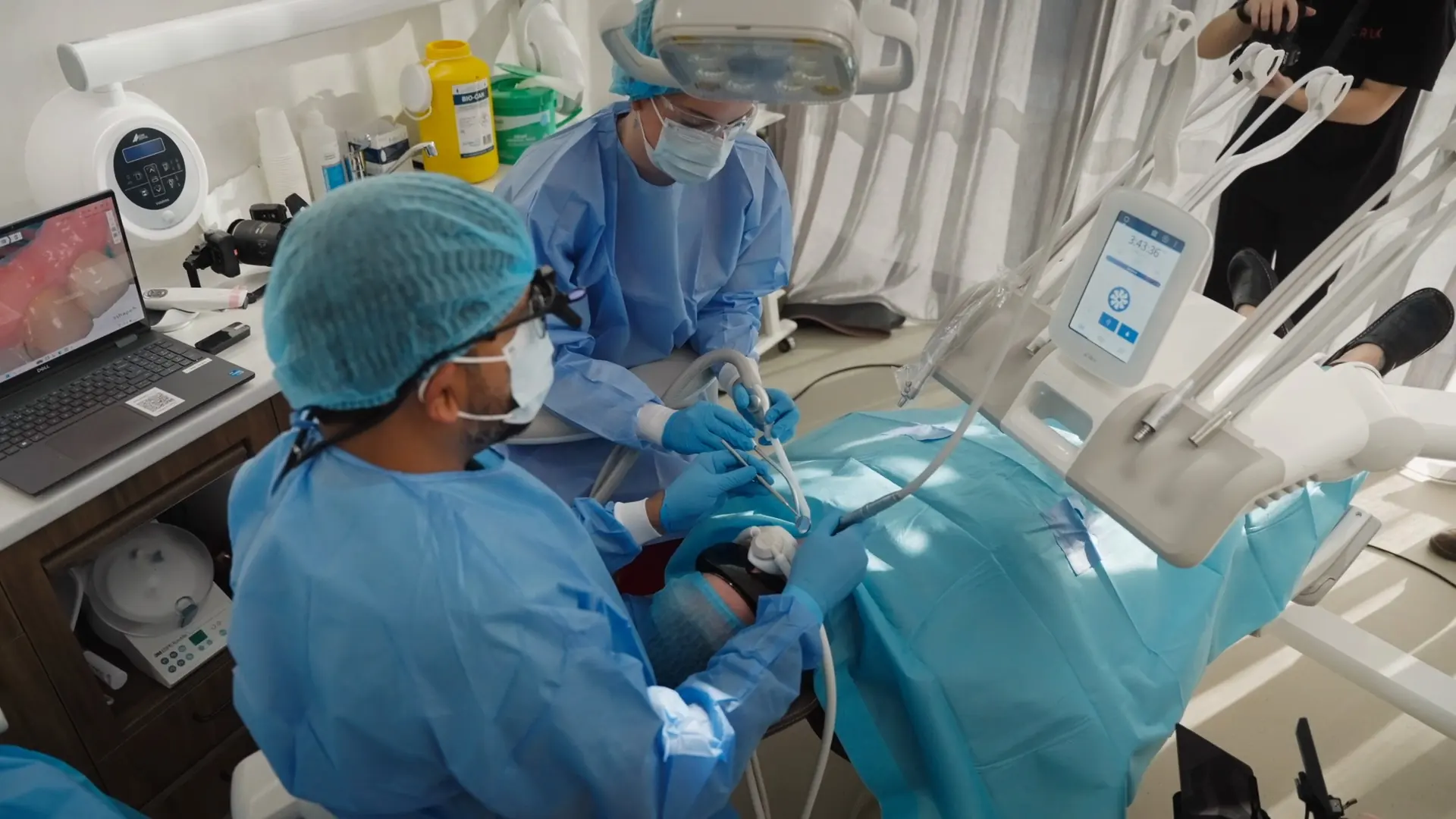
Sedation is usually discussed in the context of fear, and reasonably so. That is what brings most people to it. But there is a second group for whom fear is not really the issue: people who are perfectly able to sit through a filling, and simply cannot face the prospect of eight separate appointments to work through everything that needs doing.
That is a different problem with an overlapping solution. This article covers sedation used for length and complexity rather than anxiety. It is general information only and is not a substitute for a consultation with a qualified practitioner.
The problem with a long list
When someone has not been to a dentist for several years, the treatment plan that comes out of the first examination is often substantial. Individually, none of it may be difficult. Collectively, it can mean months of appointments.
That creates real obstacles that have nothing to do with courage:
- Time away from work. Eight appointments is eight interruptions to a working week.
- Attrition. Long treatment plans have a way of stalling around appointment four. Life intervenes, something gets rescheduled, and the remainder drifts.
- Repeated anticipation. For someone who finds dentistry unpleasant but manageable, doing it eight times is worse than doing it once, even if each individual visit is easier.
- Repeated numbing. Several appointments each involving local anaesthetic, and an afternoon of a numb face each time.
Consolidating treatment into fewer, longer appointments addresses all four.
What sedation changes about a long appointment
The physical difficulty of a long appointment is not usually pain. Local anaesthetic handles that. It is everything else: keeping your mouth open for an extended period, staying still, the jaw fatigue, the boredom, and the accumulating sense of wanting it to be over.
Sedation addresses that directly. Under IV sedation in particular, time passes differently and many people have little recollection of the appointment afterwards. A two-hour session can feel like a short one.
That is what makes consolidation practical. For many people it makes it possible to get through treatment they would otherwise find very difficult, so more can reasonably be planned into a single visit.
Our article on getting dental treatment done in fewer visits with sedation covers the general principle, and the types of dental sedation compared explains how the options differ.
What can realistically be done in one session
This has genuine limits, and it is worth being clear about them rather than implying that everything can be done at once.
What is realistic depends on:
- How much local anaesthetic is required. There are limits on safe dosage in a single session, which practically caps how many areas of the mouth can be treated at once.
- Which teeth. Work in one quadrant is more efficiently combined than work scattered across the whole mouth, because of how the anaesthetic is placed.
- The type of treatment. Some procedures have their own sequencing requirements. A crown involves preparation, then a laboratory stage, then fitting: that cannot be collapsed into one visit regardless of sedation.
- Your medical history. This influences both the sedation approach and the appointment length.
- Healing. Some things are better staged so tissue can recover.
So the realistic outcome is often “eight appointments becomes two or three”, not “eight becomes one”. That is still a substantial difference.
How the appointment is planned
The sequence usually looks like this:
- Examination and treatment plan: an ordinary appointment, with x-rays, establishing what needs doing.
- A discussion about sequencing: what can be grouped, in what order, and how many sessions that means.
- A sedation assessment: medical history, medications, and which type of sedation suits. Our article on whether sedation dentistry is safe explains what this involves.
- The treatment session or sessions.
- Review, and any remaining staged work.
Sedation at Dental Embassy is provided in-house at our Braddon practice, with Dr Anna Huang, our IV sedationist, administering and monitoring the sedation throughout. Because it is on site rather than referred elsewhere, the assessment and the treatment happen with the same team.
Planning the day and the day after
A longer appointment under sedation requires more planning around it than a routine filling:
- A responsible adult to take you home and stay with you afterwards, for IV and deeper sedation.
- No driving for the rest of the day, and no operating machinery, signing important documents or drinking alcohol until the following day.
- Fasting instructions: follow the timing exactly as given.
- Take the day off. Do not plan to return to work afterwards.
- Expect some soreness if significant treatment was done. More work in one session means more to recover from, which is the genuine trade-off against fewer visits.
Our guide to what to expect with IV sedation dentistry walks through the day itself.
Who this tends to suit
In our experience it is most useful for people who have been away from dentistry for a long stretch and are facing a substantial catch-up, people with demanding or inflexible schedules, and people who find dentistry tolerable but tedious and would rather compress it.
That last group is more common than it sounds and rarely thinks sedation applies to them, because they do not consider themselves anxious. Sedation is not exclusively for fear.
Canberra’s inner north generates a good deal of the first category. Braddon runs at around 60 per cent renters with a median age of 30, Civic at around 62 per cent with a median age of 27, and Kingston at around 51 per cent on the 2021 Census. In a catchment that transient, people lose their dentist by relocating rather than by avoiding, and arrive several years later with a list.
Sedation dentistry at Dental Embassy
Dental Embassy is on Northbourne Avenue in Braddon, a short walk or light rail trip from Civic. If you are facing a long treatment plan and would rather compress it into fewer visits, that is worth raising when the plan is made rather than after it has started.
You can read more on our sedation dentistry page, call us on 1300 000 230, or get in touch to arrange a consultation.
Have a question about your own situation?
Book a consultation with the team at Dental Embassy in Braddon. We’ll assess your teeth, explain your options, and answer your questions before anything is decided.