Oral Sedation, IV Sedation and General Anaesthetic: What's the Difference
An educational comparison of dental sedation options: nitrous oxide, oral and IV sedation, and general anaesthetic, from Dental Embassy in Braddon, Canberra.
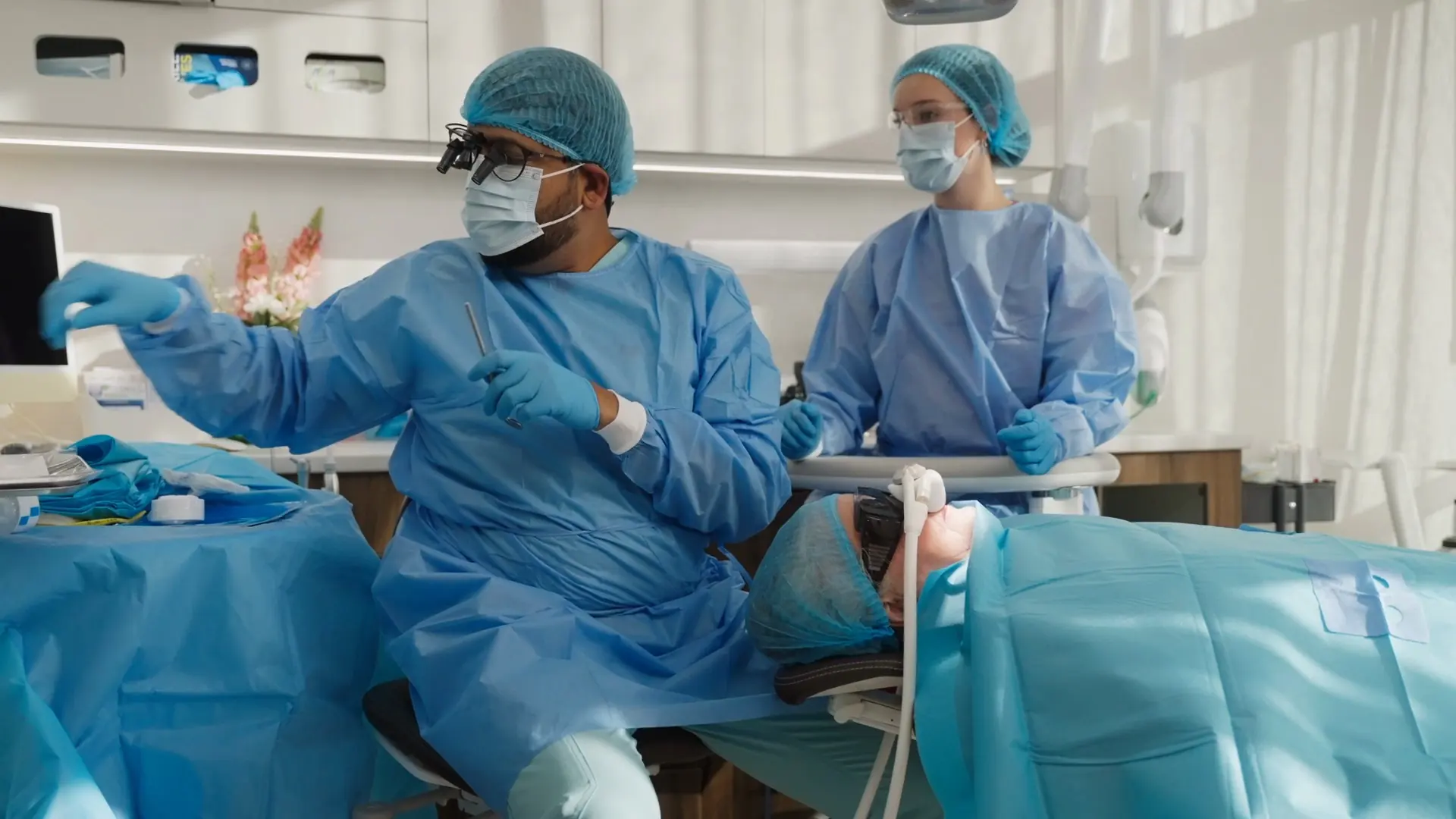
If you have been putting off dental treatment because of anxiety, the amount of care involved, or a difficult past experience, you may have come across terms like “happy gas”, “oral sedation”, “IV sedation” and “general anaesthetic”. They are not interchangeable: each describes a different level of relaxation, works in a different way, and suits different situations. We hear the same questions often from people around Canberra’s inner north (students near the ANU in Acton, renters in Braddon and Turner, and professionals working in Civic) who have finally decided to deal with something they have been avoiding and want to know which option fits. This article explains how the main options compare, so you can have a more informed conversation with a qualified practitioner. It is general information only and is not a substitute for a consultation.
The main types at a glance
Sedation exists on a spectrum, from light and easily reversible through to full unconsciousness. Below is a broad comparison. The right option for any individual depends on their medical history, the treatment planned, and a professional assessment.
| Option | How it’s given | Depth | Awareness | Recovery |
|---|---|---|---|---|
| Nitrous oxide (“happy gas”) | Inhaled through a nose mask | Light | Awake and responsive | Wears off quickly; usually able to drive home |
| Oral sedation | A tablet taken before the appointment | Light to moderate | Drowsy but rousable | Lasts several hours; an escort home is needed |
| IV sedation | Medication through a cannula in a vein | Moderate to deep (conscious sedation) | Relaxed, sleep-like; often little memory of it | Rest of the day affected; an escort home is required |
| General anaesthetic | Given by an anaesthetist, typically in hospital | Full unconsciousness | Fully “under” | Longer recovery; supervised setting |
Nitrous oxide (“happy gas”)
Nitrous oxide is the lightest option. You breathe a mix of nitrous oxide and oxygen through a small mask over your nose, and it produces a calm, slightly floaty feeling while you stay fully awake and able to talk. The effect can be adjusted during the appointment, and because it clears from your system quickly once the mask comes off, many people are able to drive themselves home afterwards.
It may suit people with mild anxiety, or those who want a little help staying relaxed for a routine procedure. Because it wears off quickly, it can be a practical choice if you have driven in for the appointment and want to get on with your day. Being light, though, it may not be enough on its own for people with significant fear or for longer, more involved treatment.
Oral sedation
Oral sedation involves taking prescribed medication (usually a tablet) a short time before your appointment. It produces a deeper sense of calm than nitrous oxide, and you may feel quite drowsy, though you remain rousable and able to respond.
Because the medication is swallowed, its effect cannot be fine-tuned as precisely during the appointment as sedation given through a vein, and it takes some time to build up. It can affect your coordination and judgement for the rest of the day, so a responsible adult needs to take you home, and the usual precautions about driving and alcohol apply. Oral sedation may be discussed for people whose anxiety is more than mild but who do not require deeper sedation.
IV (intravenous) sedation
IV sedation is a form of conscious sedation delivered through a small cannula placed in a vein, usually in the back of the hand or arm. It brings you to a deeply relaxed, sleep-like state while you continue to breathe on your own and respond to gentle prompts. Many people remember little or nothing of the appointment afterwards.
Because the medication is given directly into a vein, its effect takes hold quickly and can be adjusted during treatment. This makes IV sedation an option people sometimes consider for significant dental anxiety, a strong gag reflex, or longer treatment that they would prefer to complete in fewer visits. It requires fasting beforehand, continuous monitoring during the appointment, and a responsible adult to take you home. If you would like a fuller explanation of what an IV sedation appointment involves, our separate guide on IV sedation dentistry covers it in more detail.
General anaesthetic
A general anaesthetic is different in kind from the options above. Rather than a relaxed, responsive state, it renders you fully unconscious. It is administered and monitored by a specialist anaesthetist and is typically performed in a hospital setting rather than a dental practice, because of the equipment, staffing and recovery facilities involved.
A general anaesthetic may be raised for very extensive treatment, for some complex surgical cases, or for particular patients where other approaches are not suitable. Recovery generally takes longer than with conscious sedation, and it is carried out in a supervised environment. Whether it is appropriate is a decision made with the relevant specialists as part of planning your care.
How suitability is decided
There is no single option that is right for everyone, and one method is not simply an “upgrade” on another. They serve different needs. Which approach is appropriate for you depends on several things:
- your medical history, current medications and general health
- the type and length of treatment planned
- your level of anxiety and past experiences
- practical factors, such as whether someone can take you home, worth thinking about early if you live alone or have moved to Canberra without family close by
This is why a thorough health review always comes first. Some medical conditions and medications affect which forms of sedation are suitable, and a qualified practitioner will weigh these before recommending anything. The goal is to match the level of sedation to your individual circumstances, not to the procedure alone.
Sedation dentistry at Dental Embassy
Dental Embassy on Northbourne Avenue in Braddon is a sedation-focused practice serving Canberra and the surrounding region. We offer nitrous oxide, oral sedation and IV sedation in-house, so lighter and deeper conscious-sedation options can be discussed and provided in one place rather than sending you elsewhere for the deeper ones. Our IV sedation is provided by practitioners with relevant sedation training, including Dr Anna Huang, our IV sedationist, alongside our principal dentist Dr Srikanth Karumuri, with continuous monitoring throughout the appointment. Where a general anaesthetic is the more suitable path, that is coordinated in the appropriate hospital setting.
If you are unsure which option might suit you, the starting point is a consultation, where your health history and treatment needs are assessed and your options explained. You can read more on our sedation dentistry page, call us on 1300 000 230, or book a consultation to discuss which option suits you.
This article is general information only and does not constitute dental or medical advice. Any procedure involving sedation carries risks. Before proceeding, you should seek advice from an appropriately qualified health practitioner about your individual circumstances.
Have a question about your own situation?
Book a consultation with the team at Dental Embassy in Braddon. We’ll assess your teeth, explain your options, and answer your questions before anything is decided.