Is Sedation Dentistry Safe? Risks, Suitability and Preparation
How sedation dentistry is kept safe: monitoring, health assessment, medications and conditions that affect suitability, and how to prepare.
“Is it safe?” is one of the first questions people ask when sedation dentistry comes up, and it is a fair one. It tends to come from people who have delayed care for a long time: anxious patients right across Canberra, and plenty of busy Civic professionals and inner-north renters who keep meaning to sort out a niggling problem but never quite book it in. Sedation involves medication, and any medication deserves a careful, honest conversation rather than a quick reassurance. The short answer is that sedation dentistry is a well-established part of modern dental care when it is provided by trained practitioners, with proper assessment beforehand and monitoring throughout. This article explains how that safety is built in, who sedation may or may not suit, and how you can prepare. It is general information only and is not a substitute for a consultation with a qualified practitioner.
What “safe” actually means in this context
No procedure that involves medication is completely without risk, and it would be misleading to suggest otherwise. What makes sedation dentistry manageable is not the absence of risk but the way risk is identified and reduced, through a health assessment before your appointment, the right choice of sedation for your situation, and continuous monitoring while you are sedated.
It also helps to understand that dental sedation usually means conscious sedation, not a general anaesthetic. With conscious sedation, whether that is nitrous oxide (“happy gas”), oral sedation, or intravenous (IV) sedation, you remain able to breathe on your own and respond to gentle prompts, even while you are deeply relaxed. You can read more about how these differ in our overview of the types of dental sedation compared.
Why a health assessment comes first
Suitability for sedation is an individual matter, which is why a thorough health review always happens before any decision is made. During this review, a practitioner looks at your medical history, your current medications, and the treatment you need, and weighs those against the different sedation options.
This assessment matters because it lets your practitioner tailor the approach to you rather than applying a one-size-fits-all plan. In some cases it may point towards a lighter form of sedation; in others it may suggest that treatment be staged differently, or that further information is needed before proceeding. The point of the assessment is not to create hurdles: it is to make sure any sedation used is appropriate for your body and your circumstances.
Medical conditions and medications that affect suitability
Certain health factors can influence whether a particular type of sedation is suitable, or whether extra precautions are needed. These are exactly the things your practitioner will want to know about. It is worth being open and complete when you share your history, including things you might not think are relevant.
Factors that commonly come up in a sedation assessment include:
- your current medications, including prescription, over-the-counter and herbal products
- heart, lung or breathing conditions
- allergies and any past reactions to anaesthetic or sedative medications
- pregnancy or the possibility of pregnancy
- your weight and general health
- alcohol or recreational substance use
- previous experiences with sedation or anaesthesia
None of these automatically rules sedation in or out. They are simply part of the picture your practitioner builds so the right decision can be made with you rather than for you. If something in your history means a particular option is not ideal, that is useful to know early, and there is often more than one way forward.
How you are monitored during sedation
Monitoring is central to how sedation is provided safely. While you are sedated, a trained practitioner keeps a continuous eye on your physical signs so that any change is noticed promptly.
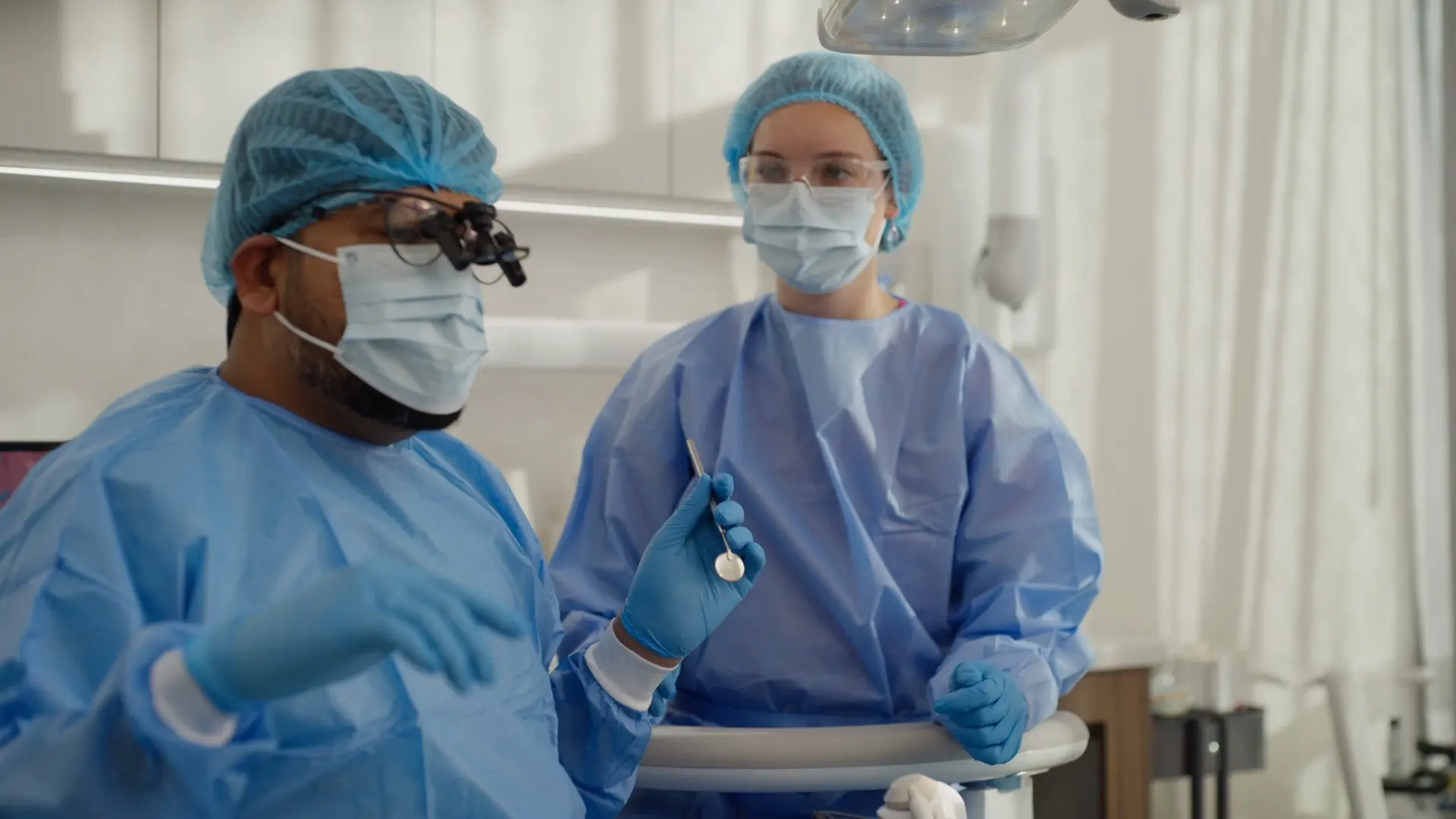
During IV sedation, monitoring typically includes measurements such as your heart rate, blood oxygen levels and blood pressure throughout the appointment. At Dental Embassy in Braddon, sedation is provided in-house by practitioners with relevant training, including Dr Anna Huang, our IV sedationist, who provides continuous monitoring, alongside our principal dentist Dr Srikanth Karumuri. Because the sedation is provided on site rather than referred to a separate clinic elsewhere in Canberra, the same team that assesses you also cares for you on the day.
Preparing for a sedation appointment
Good preparation is part of keeping sedation safe, and most of it is straightforward. Your practice will give you specific instructions, and following them closely is important. Preparation commonly includes:
- Fasting: you may be asked not to eat or drink for a set period beforehand. This reduces certain risks, so it is worth following the timing exactly as given.
- Medication guidance: instructions on which of your regular medications to take, and which to pause, on the day.
- Arranging a chaperone: for IV and other deeper sedation, you will need a responsible adult to take you home and stay with you. It is worth sorting this out in advance, whether that is a friend picking you up from Braddon or a short trip back across the inner north.
- No driving afterwards: because sedative medication can affect your coordination, memory and judgement for the rest of the day, you should not drive, operate machinery, sign important documents or drink alcohol until the following day. If you would normally walk or take the light rail in, plan for someone to accompany you home rather than travelling alone.
These precautions are standard, not a sign that anything is wrong. They exist because sedation lingers in your system after the appointment ends, even once you feel reasonably alert. If you would like a fuller picture of the day itself, our guide on what to expect with IV sedation dentistry walks through it step by step.
Talking through your concerns
If you are nervous about sedation (or about dental treatment generally), that is a normal starting point, not something to apologise for. A good consultation gives you space to ask questions and to understand the risks and benefits before you decide anything. You may also find our practical suggestions on managing dental anxiety in Canberra helpful, whether or not you end up choosing sedation.
The most useful thing you can do is share your history openly and ask about anything that worries you. Sedation works best as a shared decision, made with a practitioner who understands your circumstances.
Sedation dentistry at Dental Embassy
Dental Embassy in Braddon, Canberra is a sedation-focused practice offering nitrous oxide, oral and IV sedation in-house. If you would like to understand whether sedation is appropriate for your situation, the starting point is a consultation, where your health history and treatment needs are assessed and your options explained.
You can read more on our sedation dentistry page, call us on 1300 000 230, or get in touch to arrange a consultation.
This article is general information only and does not constitute dental or medical advice. Any procedure involving sedation carries risks. Before proceeding, you should seek advice from an appropriately qualified health practitioner about your individual circumstances.
Have a question about your own situation?
Book a consultation with the team at Dental Embassy in Braddon. We’ll assess your teeth, explain your options, and answer your questions before anything is decided.