Fixing a Chipped Front Tooth
What to do straight after chipping a front tooth, and how dentists decide between smoothing, bonding, a veneer or a crown.
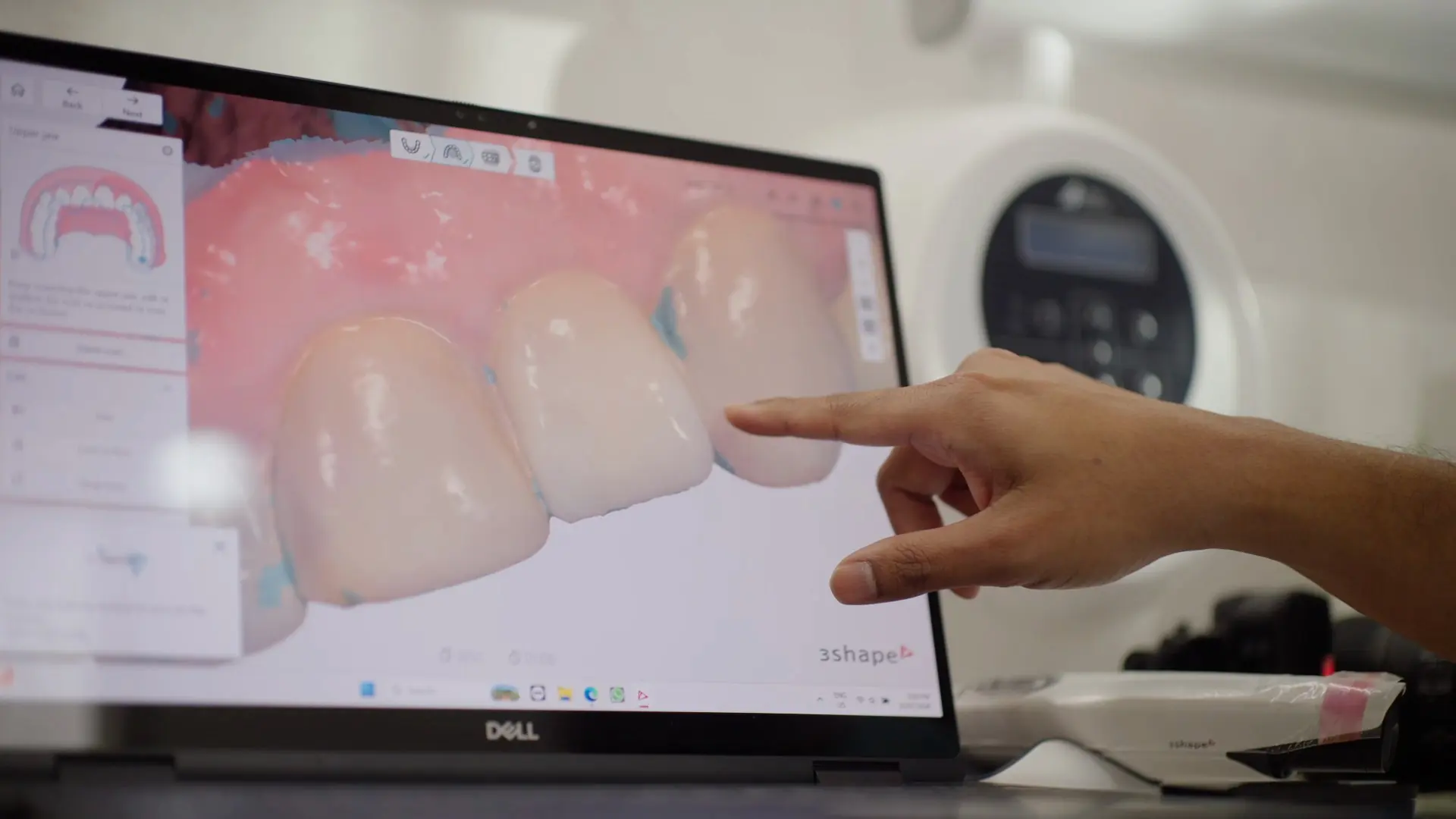
A chipped front tooth is one of those things that feels far worse than it usually is. It happens instantly (a fall, a stray elbow at sport, a bottle top, a hard olive stone) and because it is right at the front, it dominates your attention immediately.
The good news is that most chips are straightforward to address, and several of the options are conservative. What matters is having it assessed rather than deciding for yourself that it is only cosmetic. This article covers both the immediate steps and the repair options. It is general information only and is not a substitute for an assessment of your tooth.
What to do straight away
Keep the fragment if you can find it. Put it in milk or saline: the same principle as for a knocked-out tooth. In some cases a clean fragment can be bonded back on, which is the most conservative repair available. Do not scrub it.
Rinse gently with warm water.
Check whether it is sensitive. Sharp sensitivity to air or cold suggests the chip has gone through the enamel into the dentine beneath, which changes the urgency.
Cover a sharp edge. Orthodontic wax or a piece of sugar-free gum over the edge stops it cutting your tongue or lip until you are seen.
Note whether the tooth feels loose or the bite feels different. Either suggests the impact affected more than the visible edge, and both warrant a prompt appointment.
If the injury involved a significant knock, the tooth may need monitoring over time even if it looks fine: trauma can affect the nerve months later. Our article on what to do in a dental emergency covers the broader picture, and the emergency dentistry page explains how urgent appointments work.
Why the size of the chip is not the whole story
People tend to assess a chip by how it looks. Dentists assess it by how deep it goes, because that determines what the tooth needs.
- Enamel only. The outer layer. Often no sensitivity. Frequently repairable by smoothing the edge or with a small amount of bonding.
- Into dentine. The softer layer beneath, which contains microscopic tubules connecting to the nerve. Usually sensitive to cold and air. Needs covering, both for comfort and to protect the tooth.
- Exposing the pulp. A pink or red spot visible at the fracture, usually painful. This is urgent: the nerve is exposed, and prompt treatment gives the best chance of managing it.
- Extending below the gum line. More complicated, and affects whether and how the tooth can be restored.
A small chip that is deep can matter more than a larger chip that is shallow, which is why an assessment is worth having even when the tooth looks fine to you.
The repair options
Smoothing. For a very minor enamel chip, sometimes the edge is simply polished smooth. No material added, nothing removed beyond a fraction of a millimetre. Not always sufficient, but worth asking about before agreeing to more.
Reattaching the fragment. Where the piece has been kept in good condition and fits cleanly, it can sometimes be bonded back. Because the fragment is your own tooth, its colour and translucency are naturally your own, though how the finished repair looks depends on the fracture and on how the fragment was kept.
Composite bonding. Tooth-coloured resin applied directly, shaped and set in one appointment. Usually involves little or no removal of healthy tooth, which makes it largely reversible. The most common answer for a typical front-tooth chip. It can stain or chip over time and may need occasional repair, but it does not commit the tooth to anything.
A veneer. Considered where the chip is large, where the tooth has other issues alongside it, or where several front teeth need addressing together. It involves removing some enamel permanently. See our article on what to expect when you’re considering veneers.
A crown. For a substantially broken-down tooth, where a facing would not have enough to hold onto. Our article on when a tooth needs a crown covers this.
Root canal treatment first. If the pulp is exposed or the nerve subsequently dies, the inside of the tooth is dealt with before the outside is rebuilt. Our root canal treatment page explains that.
The conservative principle
For a straightforward chip, bonding is usually the sensible starting point, for one reason: it keeps your options open. Little or no healthy tooth is removed, so if in ten years you want something different, you have not permanently altered anything.
A veneer or crown may well be the right answer for a heavily damaged tooth. But being offered a veneer for a small chip is worth questioning: ask directly whether bonding would address it, and what specifically makes the more permanent option preferable in your case.
Our article on small changes rather than a makeover sets out how we think about this.
If the tooth darkens later
Occasionally a tooth that has taken a knock gradually darkens over the following months or years. That usually means the nerve inside has died, even if there was no pain at the time.
It is worth having looked at rather than simply covered up, because the internal cause needs addressing. Once treated, there are approaches for the discolouration itself. The important part is not assuming that a darkening tooth is purely a cosmetic matter.
Sport, and where it happens
A fair proportion of chipped front teeth arrive from sport. In Canberra that means the ovals and courts scattered through the inner north, and a mouthguard, properly fitted, remains the most effective preventive measure for contact sport. A custom-fitted one fits better and is more likely to be worn than a boil-and-bite version, which matters, because the guard left in the bag protects nothing.
This applies to adults as much as to children. Braddon, Turner and O’Connor have median ages between 30 and 35, with a lot of social sport played through the week.
For children, a chipped tooth also raises the question of whether it is a baby or adult tooth, which changes the approach entirely. Our article on what to do about a knocked-out or broken baby tooth covers that, and the children’s dentistry page explains how we see younger patients.
Cosmetic dentistry at Dental Embassy
Dental Embassy is on Northbourne Avenue in Braddon, a short walk or light rail trip from Civic and the inner north. We keep urgent slots free each day, so a freshly chipped tooth can usually be seen quickly.
You can read more on our cosmetic dentistry page, call us on 1300 000 230, or get in touch.
Have a question about your own situation?
Book a consultation with the team at Dental Embassy in Braddon. We’ll assess your teeth, explain your options, and answer your questions before anything is decided.