Knocked-Out or Broken Baby Tooth: What to Do
Why a knocked-out baby tooth is handled differently from an adult tooth, what to do first, and the signs a child needs to be seen urgently.
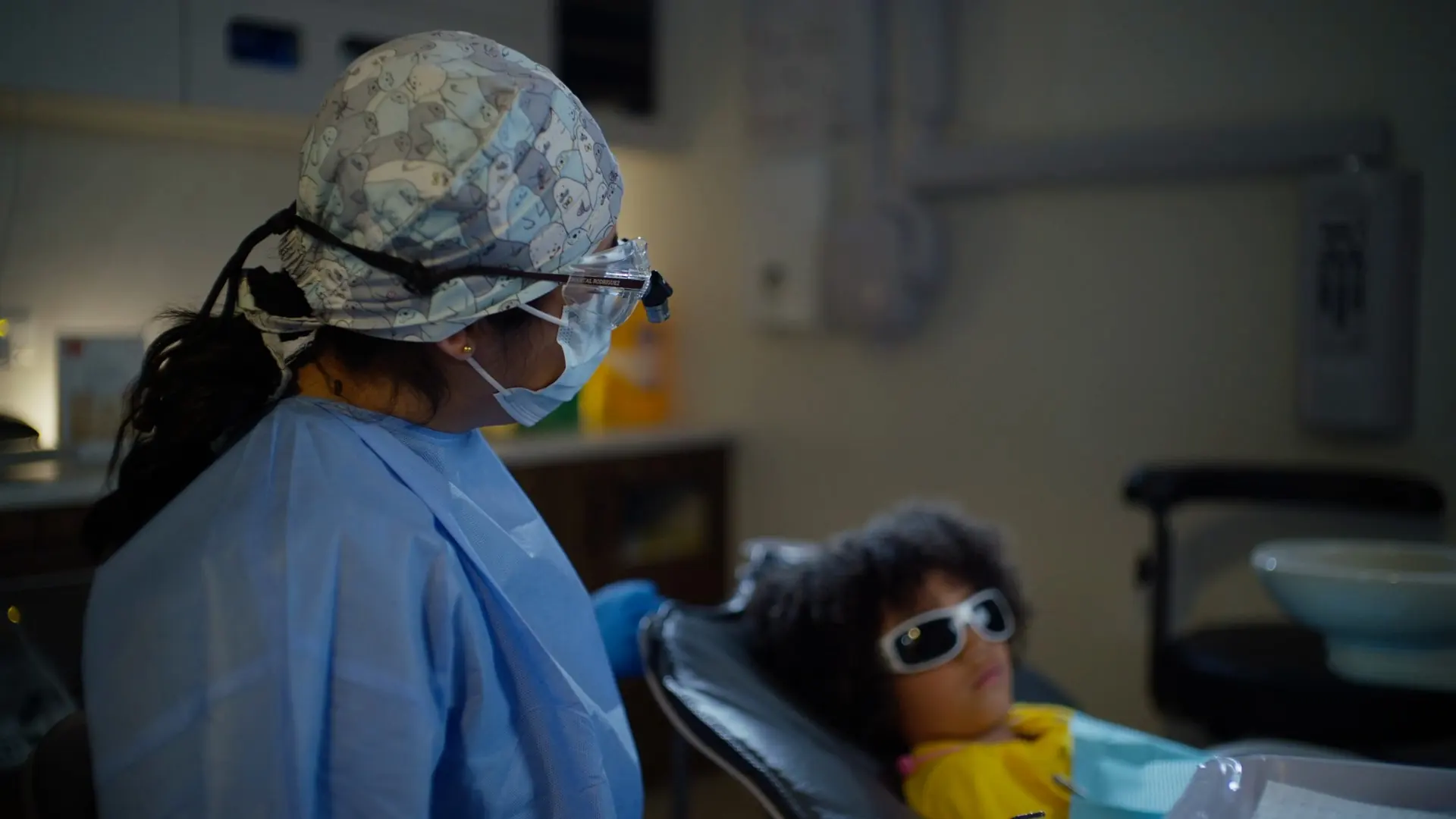
Children fall. Playgrounds, scooters, trampolines, the edge of a coffee table, and front teeth take the impact remarkably often. It is frightening at the time, partly because mouth injuries bleed impressively out of proportion to their severity.
There is one thing worth knowing in advance, because it runs opposite to the adult advice most people have absorbed. This article covers what to do. It is general information only and is not a substitute for prompt professional advice about your child.
The key difference: do not reimplant a baby tooth
For an adult tooth that has been knocked out, the standard advice is to put it back in the socket quickly, or transport it in milk, because time is critical.
For a baby tooth, the advice is the opposite: do not put it back in.
The reason is that the developing adult tooth sits immediately beyond the tip of the baby tooth’s root, separated by very little. Pushing a knocked-out baby tooth back into the socket risks damaging that developing tooth, a permanent consequence in exchange for a tooth that was going to be lost anyway. There is also a risk of the tooth being inhaled, and the procedure is distressing for a young child.
So the first practical question is which kind of tooth it is. Broadly, baby front teeth are smaller and whiter, and children generally begin losing them around six. If the child is under five, it is almost certainly a baby tooth. If you are not sure, do not reimplant: take the tooth with you and let the practice determine it.
Our article on what to do in a dental emergency covers the adult situation.
In the first few minutes
- Stay calm. Your child is reading your face.
- Control the bleeding. Clean gauze or a folded cloth, firm pressure on the area, ten minutes without lifting it to check. Mouth injuries bleed a lot and usually settle.
- Find the tooth if you can. Keep it. Bring it in even though it will not be replaced. It confirms the tooth came out whole rather than fracturing and leaving root behind.
- A cold pack on the lip or cheek for swelling, over a cloth rather than directly on skin.
- Check the rest. Other teeth loosened or moved, cuts to the lip, tongue or gum, anything embedded.
- Call a dentist, even if things look settled.
Signs that need urgent attention
Call straight away, or attend an emergency department where the injury is beyond dental:
- a tooth pushed up into the gum or visibly displaced
- bleeding that will not stop after sustained pressure
- a suspected jaw injury: difficulty closing, or the bite feeling wrong
- loss of consciousness, vomiting, drowsiness or confusion after the fall: these are head-injury signs and take priority over the tooth
- a deep cut needing stitches
- an adult tooth knocked out: this one is time-critical
A tooth driven up into the gum is easy to mistake for a tooth that has come out entirely, since neither is visible. It needs assessing.
Broken and chipped baby teeth
Chips are common and often minor, but the depth matters more than the size. A shallow enamel chip may only need smoothing. A deeper fracture into the dentine may be sensitive and need covering. If there is a pink or red spot at the fracture, the nerve is exposed and it needs prompt attention.
Whether a broken baby tooth is repaired, left, or removed depends on how much is left, how close the child is to losing it naturally, and whether it is causing trouble. Removing a baby tooth is not automatically the easy answer: it holds space for the adult tooth coming behind it, and losing it early can allow neighbouring teeth to drift into that space.
Afterwards: what to watch for
Even when things settle quickly, an injured tooth is worth keeping an eye on over the following months.
- Darkening. A traumatised baby tooth commonly turns grey or brown over weeks or months. This is common, does not always require treatment, and should be checked rather than assumed fine.
- A gum boil or swelling near the tooth suggests infection and needs seeing.
- Pain on biting that persists.
- The tooth becoming loose later.
There is also the adult tooth developing behind it. A significant knock to a baby tooth can occasionally affect it, sometimes appearing years later as a mark or an irregularity on the adult tooth when it comes through. Nothing can be done preventively, but it is a reason for follow-up appointments after a notable injury, and a reason to mention the old injury when the adult teeth arrive.
Reducing the risk
- Mouthguards for contact sport, custom-fitted where possible. Better fit means it is actually worn.
- Scooters and bikes: helmets do not protect teeth, but they matter for the rest.
- Trampolines cause a notable share of childhood injuries, and dental injuries are a common feature of them; one at a time is the standard advice.
The inner north has a lot of young families around O’Connor, Watson and Downer, with median ages between 34 and 35 on the 2021 Census, and a good deal of weekend sport across the local ovals. Dental injuries are an ordinary part of that.
Getting seen
We keep urgent slots free each day at our Braddon practice, and we are on Northbourne Avenue with light rail outside, which makes us reachable from Civic, Dickson, Turner and the inner north without a parking search. We open from 7:30am on weekdays and 9:00am to 3:00pm on Saturdays.
When you call, say what happened, how old the child is, which tooth, and whether you have it. That lets the front desk judge urgency properly. Our emergency dentistry page explains how urgent appointments work.
If your child is already nervous about dentists, mention that too. It changes how the appointment is approached. Our article on a first visit for a nervous child covers that.
Children’s dentistry at Dental Embassy
Dental Embassy is on Northbourne Avenue in Braddon, close to Civic and the inner-north suburbs, with urgent appointments kept free each day.
You can read more on our children’s dentistry page, call us on 1300 000 230, or get in touch.
Have a question about your own situation?
Book a consultation with the team at Dental Embassy in Braddon. We’ll assess your teeth, explain your options, and answer your questions before anything is decided.