Does a Root Canal Hurt? What the Appointment Is Really Like
An honest look at what root canal treatment feels like during the appointment and afterwards, and what to do if numbing is difficult.
“Root canal” has become shorthand in ordinary speech for something to be endured. People use it as a comparison, I’d rather have a root canal, which tells you how firmly the reputation has settled, and how little it has been revisited.
It is worth separating two different things that get mixed together: the pain that brings someone in, and the treatment itself. This article deals with both honestly, including the situations where treatment is less comfortable than anyone would like. It is general information only and is not a substitute for a consultation with a qualified practitioner.
Where the reputation came from
Two things built it.
The first is that the procedure has improved considerably. Techniques, instruments, anaesthetics and imaging are not what they were several decades ago, but the stories from that era outlived the era itself, passed along by people describing something they had once heard about.
The second is more interesting. Most people who have root canal treatment arrive already in significant pain. That is usually what prompted the appointment. The pain is caused by the inflamed or infected pulp inside the tooth, not by the dentist. But the two get associated in memory, and the treatment ends up carrying the blame for the toothache that preceded it.
For a lot of people, root canal treatment is the thing that ends a period of severe pain rather than the thing that causes it.
What it actually feels like during the appointment
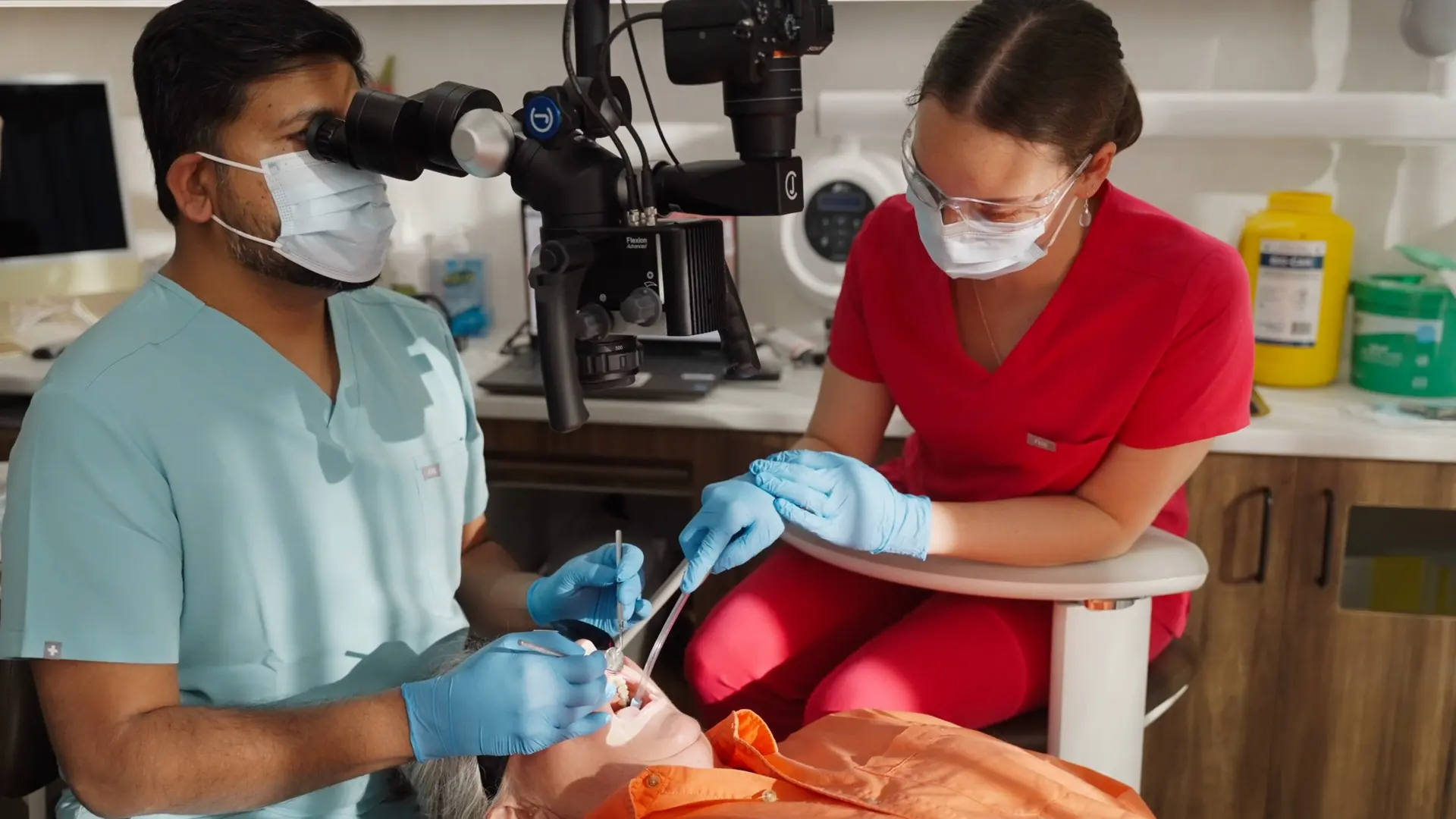
With effective local anaesthetic, root canal treatment should not be painful. What you can expect to be aware of is pressure, vibration, the sound of instruments, and the sensation of the dentist working: the same category of experience as having a deep filling done.
The main difference from a filling is time. The cleaning stage cannot be hurried, so the appointment is longer, often an hour or more. Many people find the length the harder part: keeping your mouth open, staying still, and being in the chair for an extended stretch. That is a fair thing to find difficult and worth naming in advance rather than discovering halfway through. Our step-by-step walkthrough of root canal treatment sets out what happens in what order, which many people find takes the edge off.
The honest part: when numbing is harder
There is a situation that deserves a straight answer rather than a reassuring one. A tooth with an acutely inflamed pulp (a “hot” tooth) can be genuinely harder to anaesthetise than a healthy tooth. The inflamed tissue changes how the local anaesthetic works. This is a recognised clinical problem, not a sign that something has gone wrong or that you are imagining it.
Practitioners have several ways to approach it: different injection techniques, supplementary anaesthetic delivered closer to or inside the tooth, allowing more time for it to take effect, and in some cases addressing the acute inflammation first and completing treatment at a second visit.
What matters most is that you speak up. If you feel a sharp sensation rather than pressure, say so immediately. Agreeing a hand signal beforehand makes this easy. There is nothing to be gained by enduring it silently, and every practitioner would rather stop and add more anaesthetic.
Afterwards: the first few days
Once the anaesthetic wears off, it is normal for the tooth and surrounding area to feel tender for a few days, particularly when biting on it. The ligament that suspends the tooth in the bone has been irritated by the work, and that settles.
Typical guidance includes:
- Chew on the other side until the tooth is fully restored, especially if it has a temporary filling.
- Ordinary pain relief is usually adequate for the tenderness. Follow the advice you are given and the directions on the packaging.
- Expect improvement, not perfection, day to day. Tenderness that is gradually reducing is the normal pattern.
- Get in touch if it worsens. Increasing pain, swelling, or a temporary filling that comes out are all reasons to call rather than wait it out.
Some tenderness in the first few days is expected. Pain that is escalating rather than settling is not, and is worth a phone call. Our article on when a toothache is an emergency covers how to judge that.
If the fear is the real obstacle
For some people the issue is not the specific procedure but dentistry generally, and if that is you, being told “it doesn’t really hurt” is not much help. Dental anxiety is common, it is not irrational, and it usually has a history behind it.
There are practical ways to manage it, from simply having the process explained before anything is done, through to nitrous oxide, oral sedation or IV sedation for people who need more. Dental Embassy in Braddon is a sedation-focused practice, and sedation is provided in-house: Dr Anna Huang is our IV sedationist. Our guide to the types of dental sedation compared explains how the options differ, and our practical suggestions for managing dental anxiety may help whether or not sedation is part of your plan.
This comes up often in the inner north. Braddon, Turner and Civic are transient, heavily rented suburbs (around 60 per cent of Braddon households rent, on the 2021 Census) and people who have moved cities frequently have not seen a dentist since before the move. A tooth that starts aching in that situation often gets left longer than it should, not through carelessness but because there is no established dentist to ring.
Weighing it up
If a tooth needs root canal treatment, the realistic alternative is usually extraction, and losing a tooth carries its own consequences for chewing, for the teeth either side, and for what needs to be done later. Our article on how the root canal or extraction decision gets made covers that comparison properly.
The useful question is rarely “will it hurt” in the abstract. It is what your particular tooth needs, what your options are, and what can be done to make the appointment manageable for you.
Root canal treatment at Dental Embassy
Dental Embassy is on Northbourne Avenue in Braddon, a short walk or light rail trip from Civic. If a tooth is aching, or you have been told you need root canal treatment and the prospect is putting you off, we are glad to talk it through before anything is decided.
You can read more on our root canal treatment page, call us on 1300 000 230, or get in touch to arrange a consultation.
Have a question about your own situation?
Book a consultation with the team at Dental Embassy in Braddon. We’ll assess your teeth, explain your options, and answer your questions before anything is decided.