How Many Visits Does a Root Canal Take?
Why root canal treatment sometimes takes one visit and sometimes two: infection, canal anatomy, and how the final restoration fits in.
It is one of the first practical questions people ask, usually because they are trying to work out how much time off they need. The honest answer is that it depends, but the factors it depends on are understandable, and knowing them makes the plan you are given easier to follow.
This article explains what drives the number of visits, and why the answer sometimes changes partway through. It is general information only and is not a substitute for a consultation with a qualified practitioner.
One visit or two: what the debate is about
Root canal treatment can sometimes be completed in a single appointment, and sometimes it is deliberately staged across two or more. Both approaches are legitimate, and the choice is made case by case rather than by fixed policy.
The core of it is this. Completing treatment in one visit means the canals are cleaned, shaped and filled in the same sitting. Staging it means the canals are cleaned and an antibacterial dressing is left inside the tooth, with a temporary filling on top, and the tooth is sealed at a later appointment. The dressing period gives infection time to settle in cases where that is the priority.
What pushes towards more than one visit
Active infection. A tooth with a significant infection at the root tip, or a visible swelling, is often better cleaned and dressed first. Sealing a heavily infected canal system immediately is sometimes the wrong move, and the dressing does useful work between visits.
Difficult canal anatomy. Molars with several canals, canals that are strongly curved, or canals that have calcified over the years all take longer to negotiate. If the cleaning stage uses up the appointment, filling waits for the next one.
Persistent symptoms. If the tooth is still notably tender when it comes time to fill, it can be reasonable to dress it again and reassess rather than pressing on.
Time available. A thorough job cannot be rushed to fit the clock. If completing properly would mean hurrying, a second visit is the better answer.
What makes a single visit more likely
Straightforward cases with limited infection, a manageable number of canals, and canals that are reasonably accessible are the ones most often completed in one appointment. Front teeth, with a single canal, are more often single-visit than lower molars.
A single visit does mean a long appointment: commonly well over an hour. That is a genuine trade-off rather than a pure win: fewer trips, but more time in the chair each time. If sitting still for a long stretch is the part you find difficult, that is worth raising when the plan is being made. Our guide to getting treatment done in fewer visits with sedation covers how that can be approached, and the sedation dentistry page explains the options.
The visit most people forget about
Whatever happens with the cleaning and filling, there is usually one more appointment: the final restoration.
A tooth that has had root canal treatment has lost sound structure, both to the original problem and to the access opening, which leaves it more prone to fracture, particularly a back tooth carrying chewing load. It generally needs a substantial restoration afterwards, and for molars that is often a crown. A crown involves preparing the tooth, taking a scan or impression, and fitting the finished restoration, which is typically its own appointment or two.
This stage matters more than its low profile suggests. A tooth left indefinitely under a temporary filling is vulnerable, and a temporary that leaks or comes out can undo the work inside. Our article on when a tooth needs a crown instead of a filling explains the reasoning, and the crowns and bridges page sets out the process.
So a realistic full sequence is often: assessment, one or two treatment visits, then restoration. When someone says “a root canal is two visits”, they are usually counting only the middle part.
Why the plan can change
Root canal treatment is one of the areas of dentistry where the picture develops as the work proceeds. An x-ray shows a great deal but not everything: an extra canal, a calcified passage, or a crack in a canal wall may only become apparent once the tooth is open.
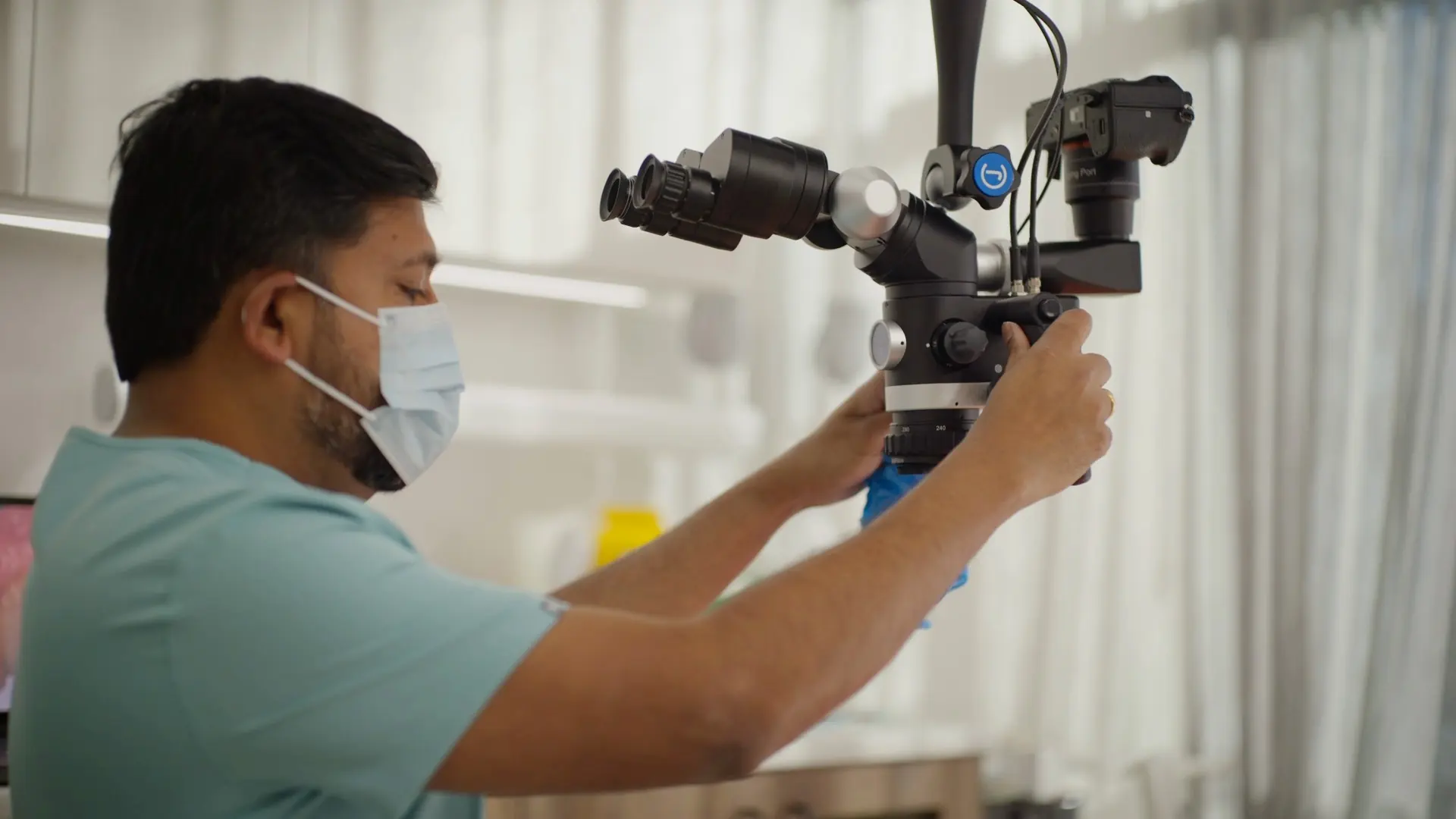
This is one reason magnification is useful. Working under a dental operating microscope, as Dr Srikanth Karumuri does for most root canal cases at our Braddon practice, means more of that anatomy is identified during treatment rather than after it. Our article on why dentists use a microscope for root canal treatment explains what that involves.
If the plan does change, it should be explained to you at the time along with what it means for the timeline. A revised plan based on what has actually been found is a normal part of the process, not a setback.
Planning around work and study
Practical scheduling matters, particularly in this part of Canberra. Braddon and Civic are dominated by younger renters (median ages of 30 and 27 respectively, with around 60 per cent of households renting on the 2021 Census) and a lot of those people work in Civic or study at the ANU nearby in Acton, where the median age is 19. Long midday appointments are not always easy to arrange.
A few things that tend to help:
- Early appointments. We open from 7:30am on weekdays, which allows a long appointment before the working day.
- Saturday mornings. We are open Saturday from 9:00am to 3:00pm.
- Know which visit is the long one. The cleaning appointment is usually the longest; the restoration visits are typically shorter.
- Plan the restoration in. Book it rather than leaving it open-ended.
Root canal treatment at Dental Embassy
Dental Embassy is on Northbourne Avenue in Braddon, a short walk or light rail trip from Civic and the inner north. If you would like to know what your tooth is likely to need and how many appointments that means, an assessment of that specific tooth is the place to start.
You can read more on our root canal treatment page, call us on 1300 000 230, or get in touch to arrange a consultation.
Have a question about your own situation?
Book a consultation with the team at Dental Embassy in Braddon. We’ll assess your teeth, explain your options, and answer your questions before anything is decided.