First Visit for a Nervous Child: How It's Handled
What a practice can do when a child is already frightened of the dentist: pacing the appointment, tell-show-do, and letting them keep control.
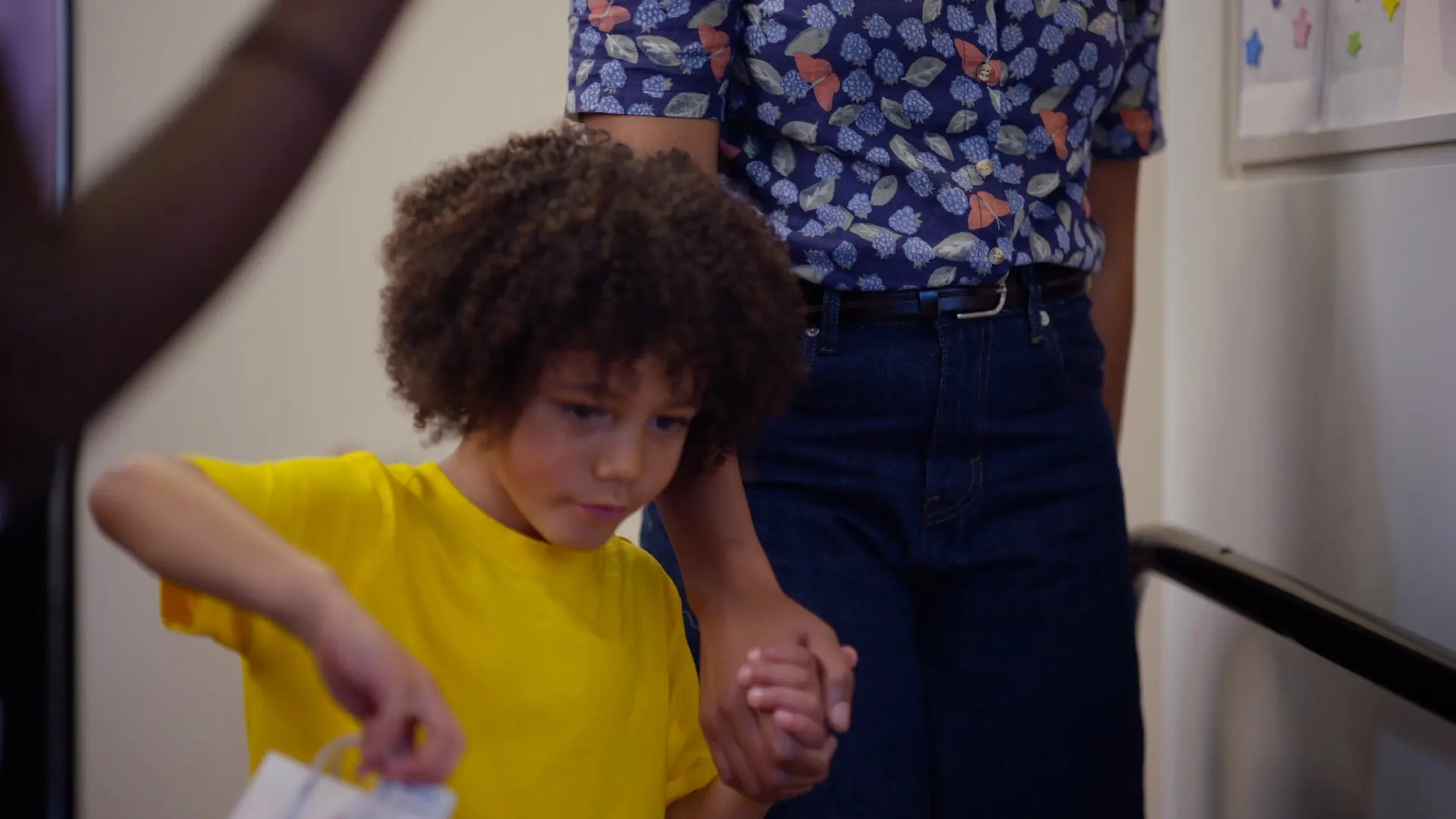
There is a difference between a child who has never been to a dentist and a child who has, and did not enjoy it. The second is a harder starting point, and it is a common one, often after an urgent visit for a painful tooth, where the priority was resolving the problem rather than easing the child into it.
This article is about that situation: what a practice can reasonably do, and what parents can do alongside it. It is general information only and is not a substitute for advice about your child. Our companion article on helping an anxious child at the dentist covers the broader ground.
The first appointment may need to achieve very little
The most useful thing a practice can offer a frightened child is an appointment with no treatment attached to it.
That might mean sitting in the chair and going up and down. Looking at the light and the mirror. Counting teeth with a finger rather than an instrument. Meeting the dentist and leaving. For a child who is genuinely afraid, an appointment where nothing bad happens is doing real work, even though it produces nothing on a treatment plan.
The temptation, often from a well-meaning parent, is to press on and get something done while they are here. That usually costs more than it gains. A child who leaves having discovered that the place is survivable is much easier to bring back.
Tell, show, do
The standard approach with children, and it holds up:
Tell: explain what is going to happen in plain, age-appropriate words, without the alarming vocabulary. “I’m going to count your teeth with my little mirror.”
Show: demonstrate it somewhere unthreatening first. The mirror on a fingernail. The suction on the back of a hand. The air-water syringe on a sleeve.
Do: then do the thing that was just described, exactly as described.
The mechanism is straightforward: nothing happens that was not previously explained and demonstrated. Surprise is what erodes trust, and trust is what the whole thing runs on.
Letting the child keep some control
A large part of dental fear is the powerlessness: lying back, mouth open, unable to speak, while someone works. Handing back a measure of control changes the experience.
Common approaches include agreeing a stop signal, such as raising a hand, and honouring it immediately when used. That last part is what makes it work. A stop signal that gets a “just one more second” is worse than none at all, because the child learns it is decorative.
Offering small genuine choices helps too: which chair, whether a parent sits alongside, which flavour of polishing paste. The choices are minor; the point is that the child is participating rather than being processed.
What parents can do, and what to avoid
Helpful:
- Book a morning appointment when possible; a tired child at 4pm has fewer reserves.
- Keep your own account of dentistry to yourself. Children are perceptive about a parent’s dread.
- Mention it briefly and close to the time, rather than a week of preparation.
- Let the practice lead the conversation once you are there.
- Treat it as ordinary afterwards. A large reward frames it as an ordeal that was survived.
Less helpful:
- Reassurance vocabulary: “it won’t hurt”, “don’t be scared”, “be brave”. Each one introduces the idea it denies.
- Promising nothing will be done, if something might be.
- Bargaining or bribery in the chair, which turns the appointment into a negotiation.
- Using the dentist as a consequence for not brushing. It works in the short term and costs a great deal later.
When treatment is actually needed
Sometimes there is a tooth that genuinely needs attention and the desensitising approach cannot take as long as would be ideal.
The options then depend on the child, the tooth and the urgency. Careful behavioural techniques handle a good deal. Nitrous oxide (happy gas) is a light inhaled sedation that some children tolerate well; it wears off quickly and the child stays awake and responsive throughout. Our article on happy gas and how nitrous oxide works explains it.
Where treatment need is more extensive, or a child genuinely cannot cope with it in the chair, other options may be discussed, which can include referral for treatment under general anaesthetic in an appropriate facility. That is a considered decision made with you, weighing the treatment required against what is realistic for your child, not a first resort.
Dental Embassy is a sedation-focused practice, and sedation here is provided in-house, with Dr Anna Huang as our IV sedationist. What is appropriate for a child differs considerably from what is appropriate for an adult, and it is assessed individually. Our sedation dentistry page sets out the general picture.
Where the fear often comes from
It is worth knowing that a child’s dental fear frequently has a traceable origin: a first visit that happened because something already hurt. Pain and dentistry become associated, and the association sticks.
That is one of the better arguments for early, routine visits before anything is wrong, a point covered in our article on when a child should first see a dentist. It is also why we would rather spend a first appointment achieving very little.
For families new to Canberra, there is a related pattern. The inner north is transient (around 60 per cent of Braddon households rent and around 62 per cent in Civic, on the 2021 Census) and a family that has moved often has a gap between dentists. Children in that gap sometimes only get seen when something goes wrong, which is exactly the sequence that builds fear.
Practicalities
We are on Northbourne Avenue in Braddon with light rail at the door, which suits families coming in from Dickson, Turner, Watson and Downer. We open from 7:30am on weekdays and 9:00am to 3:00pm on Saturdays.
When you book, say that your child is nervous and why. It changes how the appointment is scheduled and what we plan to attempt.
Children’s dentistry at Dental Embassy
Dental Embassy is on Northbourne Avenue in Braddon, close to Civic and the inner-north suburbs. If your child is anxious, we are glad to start slowly.
You can read more on our children’s dentistry page, call us on 1300 000 230, or get in touch to arrange an appointment.
Have a question about your own situation?
Book a consultation with the team at Dental Embassy in Braddon. We’ll assess your teeth, explain your options, and answer your questions before anything is decided.