How Long Do Crowns Last, and What Affects It
What influences the lifespan of a dental crown: the margin, the tooth underneath, grinding, gum health, and the signs it needs looking at.
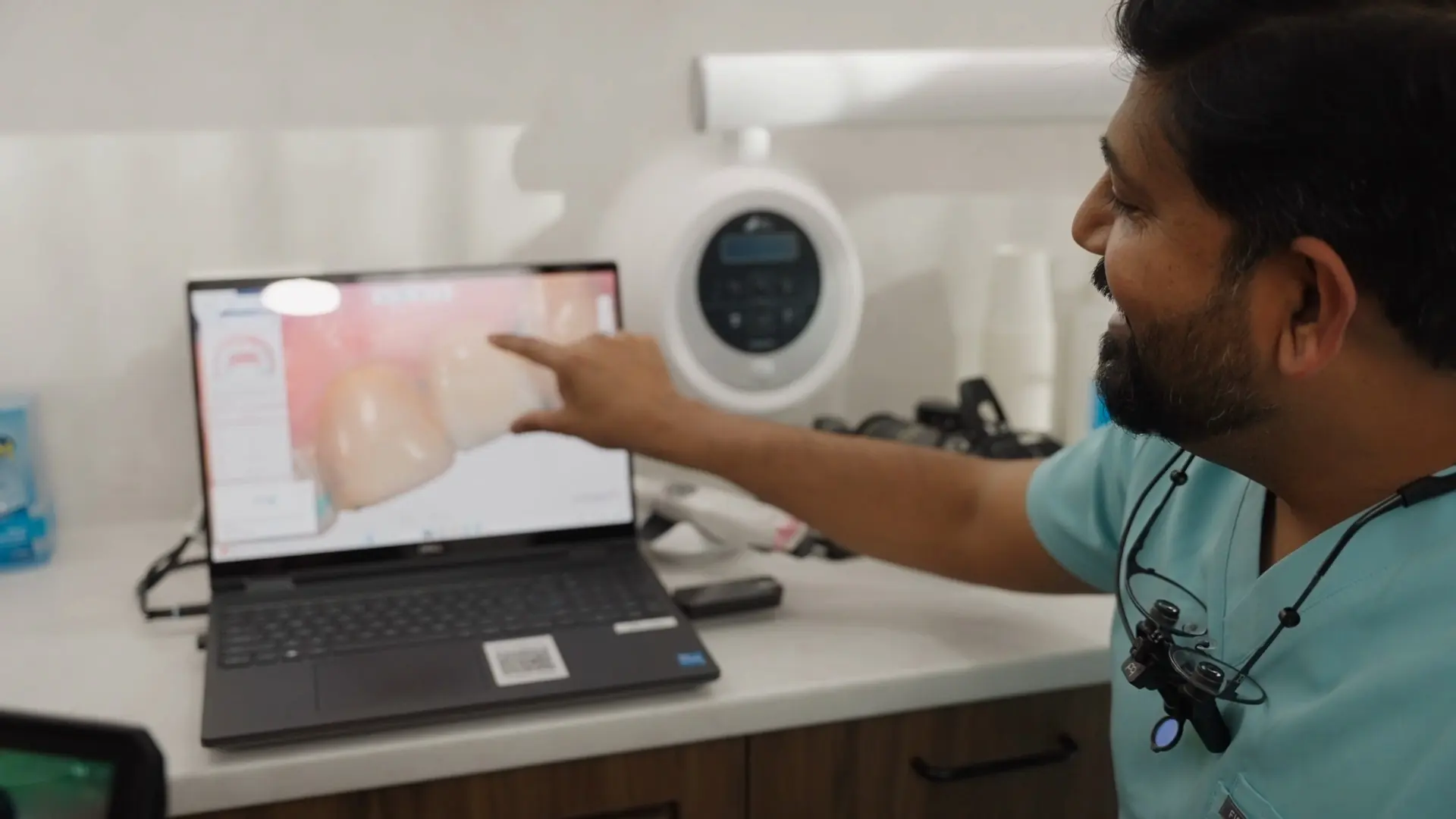
It is a reasonable question to ask before agreeing to a crown, and the honest answer is unsatisfying: it varies a great deal. Some crowns are still doing their job after twenty years. Others need attention after five.
What is more useful than a number is understanding what drives the difference, because several of those factors are within your influence, and the rest are worth knowing about so you can ask the right questions. This article covers both. It is general information only and is not a substitute for a consultation with a qualified practitioner, and nothing here is a prediction about any individual crown.
The crown usually outlives the problem it develops
Something worth grasping early: crowns rarely fail because the crown itself wears out. Modern crown materials are hard and durable.
What typically brings a crown to an end is something happening at the boundary or underneath: decay starting at the margin, the tooth beneath fracturing, or the gum receding to expose the join. The crown is often in fine condition when it comes off; the situation around it is what changed.
That reframes the question helpfully. Looking after a crown mostly means looking after the tooth and gum it sits on.
The margin
The margin is the join between the crown and the tooth, and it is where most trouble begins.
A well-adapted margin gives plaque very little to hold onto. A margin with a small ledge or gap gives bacteria a sheltered spot right at the gum line, a place that is difficult to clean and, because it sits under the crown edge, difficult to see. Decay that begins there can progress some way before it becomes obvious.
This is fine-detail work, and it is one of the reasons magnification is used in restorative dentistry as well as in root canal treatment. Dr Srikanth Karumuri works with a dental operating microscope at our Braddon practice.
What the tooth underneath is like
A crown placed on a solid, healthy tooth with plenty of structure is in a different position from one placed on a tooth that was already heavily broken down and needed a build-up first.
That is not an argument against crowning a compromised tooth. Often it is exactly the right thing to do, and the alternative is worse. It just means the starting point differs, and expectations should reflect that. If a tooth had very little left, the crown is doing more work.
Root-canal-treated teeth are a particular case. Contrary to a widespread belief, root canal treatment does not itself make a tooth brittle: what reduces its fracture resistance is how much sound structure has been lost, to the decay or crack that caused the problem and to the access made through the biting surface. That is why the amount of tooth left matters so much, and why these teeth are commonly crowned. Our article on when a tooth needs a crown instead of a filling explains that reasoning.
Grinding and clenching
Bruxism (grinding or clenching, often during sleep) puts loads on teeth well beyond normal chewing, and it does not distinguish between crowned and uncrowned teeth.
Signs include waking with a tight jaw, headaches around the temples, flattened-looking teeth, or a partner mentioning the noise. If it applies to you, it is worth raising, because a night splint can take some of that load. Untreated grinding is one of the more common reasons restorative work has a shorter life than it otherwise would.
Stress-related clenching is common enough in a city with a large concentration of office and policy work; Braddon and Civic sit at the middle of that, and around 65 per cent of Braddon residents aged 15 and over hold a bachelor’s degree or above on the 2021 Census. It is worth mentioning if you have noticed it, rather than assuming it is unrelated.
Gum health
Gums recede over time, more so where gum disease is present. When the gum around a crowned tooth recedes, the margin becomes exposed, visible as a line at the edge, and more vulnerable to decay because root surface is softer than enamel.
Keeping gums healthy is therefore part of keeping a crown serviceable. That means the ordinary things: cleaning thoroughly at the gum line, regular professional cleans, and dealing with bleeding gums rather than accepting them as normal. Our article on what happens at a check-up and clean covers what those visits involve.
How you clean it
A crown does not decay, but the tooth it is attached to certainly can. Cleaning at the margin (right where the crown meets the tooth at the gum line) is the part that matters most, and the part most often skimmed.
For a bridge, add cleaning underneath the false tooth: floss threaders or interdental brushes designed for the purpose. It takes a few extra seconds and it is the single most useful habit for a bridge’s longevity.
Signs a crown needs looking at
Worth an appointment rather than waiting:
- sensitivity to cold or sweet in a crowned tooth, especially if it is new
- discomfort when biting on it
- a rough edge, or a step you can feel with your tongue at the gum line
- a dark line appearing at the margin
- the crown feeling loose, or moving at all
- persistent bleeding from the gum around it
- food packing consistently between it and the neighbouring tooth
A crown that has come off entirely should be kept and brought in. It can sometimes be recemented. Our article on what to do if a crown or filling comes out covers what to do in the meantime.
What you can reasonably ask
- What condition is the tooth under this crown in?
- How does the margin look?
- Do you see signs of grinding?
- Is there anything about how I am cleaning that I should change?
Those questions are more productive than asking for a lifespan figure, because they are about your actual situation.
Crowns at Dental Embassy
Dental Embassy is on Northbourne Avenue in Braddon, a short walk or light rail trip from Civic and the inner-north suburbs. Whether you are considering a crown or wondering about one you have had for years, an assessment of the tooth and the margin is the place to start.
You can read more on our crowns and bridges page, call us on 1300 000 230, or get in touch to arrange a consultation.
Have a question about your own situation?
Book a consultation with the team at Dental Embassy in Braddon. We’ll assess your teeth, explain your options, and answer your questions before anything is decided.