When Should a Child First See a Dentist?
Guidance on the timing of a child's first dental visit, what happens at it, and how to prepare a young child without building it up.
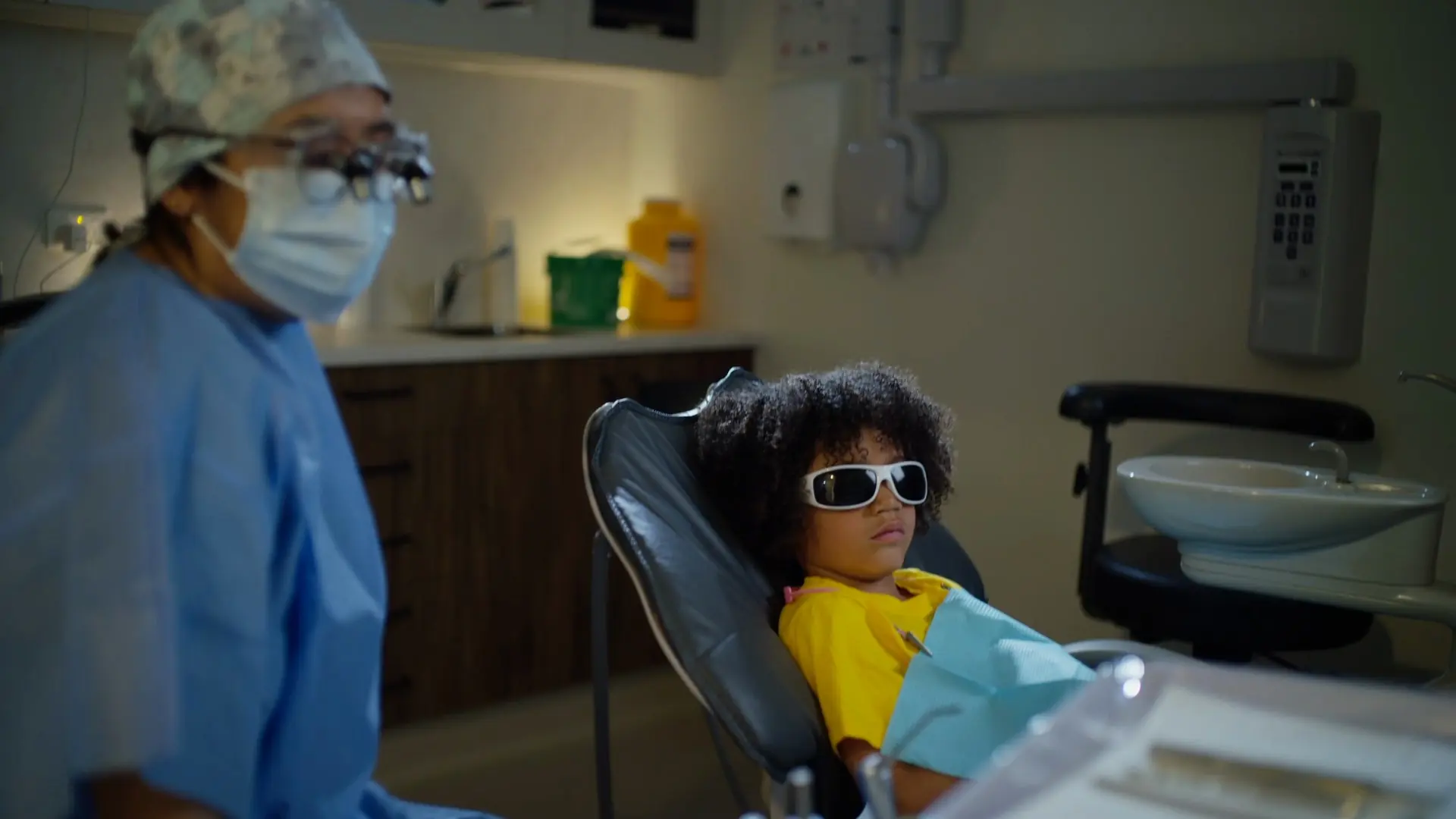
Parents ask this one a lot, usually with a slight worry that they have already left it too late. The common assumption is that dental visits start around school age, once there are enough teeth to be worth looking at.
The general guidance is considerably earlier than most people expect. This article explains when, why, and what actually happens, which is a good deal less than parents imagine. It is general information only and is not a substitute for advice about your child.
The usual guidance
The common recommendation in Australia is that a child’s first dental visit happens around the time the first tooth appears, or by about twelve months of age, whichever comes first.
For most children the first tooth arrives somewhere around six to ten months, though the range of normal is wide. If your child is two or three and has not yet been, you have not caused a problem; simply book the visit. Almost nobody arrives exactly on schedule, and turning up later is far better than not turning up.
Why so early, when there is barely anything there
The reasoning has less to do with examining teeth than with everything around them.
Establishing that the dentist is unremarkable. A child who has been coming since before they can remember treats the practice as ordinary. A child whose first visit happens at six because something hurts learns a different association. This is the single strongest argument for early visits, and it pays off for decades.
Catching problems while they are small. Decay in baby teeth can move quickly. Early signs (white spots along the gum line) are reversible with the right changes. Left alone, they are not.
Advice at the point it is useful. Feeding, bottles, dummies, thumb-sucking, how to brush a wriggling toddler’s teeth, whether the water is fluoridated, when to worry about a habit. All of this is more useful before problems form.
Establishing what normal looks like for your child. Knowing a child’s baseline makes later change easier to spot.
What actually happens at a first visit
Much less than parents expect, and that is deliberate.
For a very young child, it is often a “knee-to-knee” examination: you sit facing the dentist, your child sits on your lap facing you, and lies back so their head rests on the dentist’s knees. Your child can see your face the whole time. It takes a minute or two.
The dentist will typically look at the teeth that have come through, check the gums and soft tissues, look at how the jaws are developing, and talk to you about cleaning and diet. There are usually no x-rays at a first visit for a young child. There is often no cleaning as such.
The main aim is a short, uneventful visit. A first appointment where nothing much happens is a success, not a waste: it means the second one starts from neutral.
Preparing without making an occasion of it
The most common well-intentioned mistake is over-preparation. A week of reassurance that there is nothing to worry about tells a child there is something to worry about.
What tends to work:
- Mention it briefly and matter-of-factly, close to the day. “We’re going to see the dentist on Thursday, they count your teeth.”
- Avoid the vocabulary of reassurance. Words like “hurt”, “scared”, “brave”, “needle” and “it’ll be fine” introduce ideas that were not there.
- Do not promise nothing will happen. If treatment is needed later, you will have spent the credibility.
- Let them come along to your appointment first, if that suits: watching a parent sit in the chair uneventfully is useful.
- Book for a good time of day. Morning, after a nap and a feed, beats late afternoon.
- Keep your own feelings out of it. Children read parents accurately. If you dislike the dentist, this is a good moment not to broadcast it.
Our article on helping an anxious child at the dentist goes further into this, and our guide to a first visit for a nervous child covers the situation where the anxiety is already established.
Then what: how often?
Six-monthly is the usual starting point, adjusted to the individual child. Some children with a low risk of decay are seen less often; children with early signs, particular dietary patterns or developmental factors may be seen more frequently.
The intervals matter more in childhood than they do later, because things change quickly: teeth arrive, the bite develops, habits establish themselves.
Around the inner north
The suburbs around us cover a fairly wide span of family stages. Braddon and Civic skew young and heavily rented, with median ages of 30 and 27 on the 2021 Census. The family weight sits a little further out (O’Connor, Watson and Downer, with median ages between 34 and 35) and Gungahlin further north again.
Practically, that means school-hours appointments are in demand and early ones are easier to get. We open from 7:30am on weekdays and 9:00am to 3:00pm on Saturdays, which for a lot of families is the difference between attending and rescheduling. Being on Northbourne Avenue with light rail outside also helps if the drive is the obstacle.
What to do between now and then
- Clean teeth as soon as the first one appears: a soft brush, and a smear of toothpaste appropriate to their age.
- Wipe gums with a clean damp cloth before teeth arrive.
- Avoid bottles in bed with anything other than water.
- Watch the drinks. Juice and cordial spread through the day cause more trouble than most parents realise; water and milk are the everyday options.
- Brush for them, and then with them. Young children lack the coordination to clean their own teeth properly for some years yet.
Children’s dentistry at Dental Embassy
Dental Embassy is on Northbourne Avenue in Braddon, close to Civic and the inner-north suburbs. We are glad to see children early and to keep first visits short and unremarkable.
You can read more on our children’s dentistry page, call us on 1300 000 230, or get in touch to arrange an appointment.
Have a question about your own situation?
Book a consultation with the team at Dental Embassy in Braddon. We’ll assess your teeth, explain your options, and answer your questions before anything is decided.