Do Children Need X-rays, and How Often?
Why dental x-rays are sometimes recommended for children, what they show that an examination cannot, and how radiation dose is kept low.
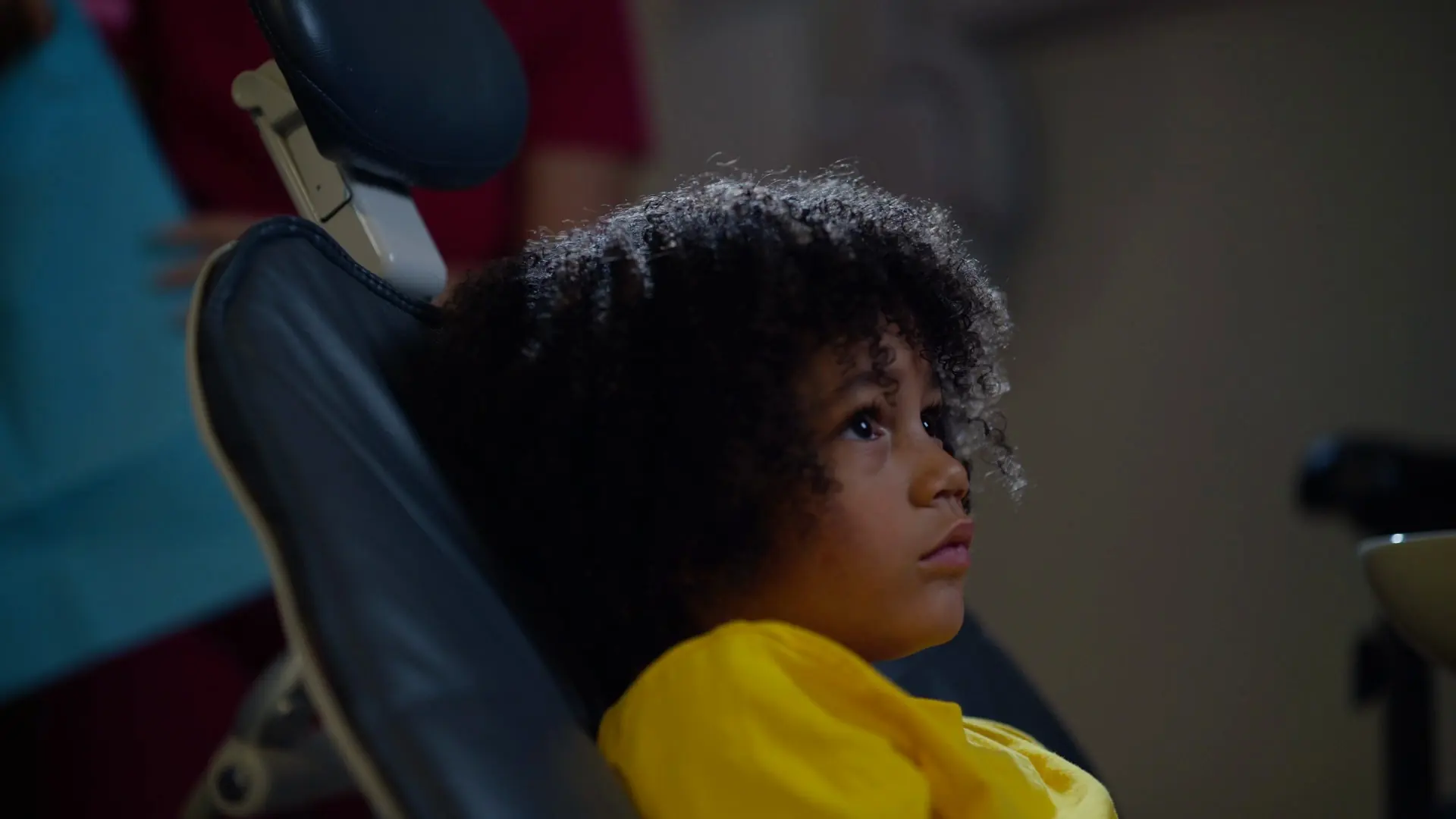
It is a fair question and a common one, and it deserves a real answer rather than a brisk reassurance. Parents are right to ask why radiation is being suggested for a child, and a practice that treats the question as an inconvenience is not giving you much confidence.
This article explains what dental x-rays show, when they are typically recommended for children, and how exposure is minimised. It is general information only and is not a substitute for advice about your child, because the answer depends on the individual.
What an examination cannot see
A visual examination is good at what it can reach: the biting surfaces, the outer and inner faces of the teeth, the gums.
What it cannot see is the surfaces where two teeth touch each other. Those contact points are pressed together, and decay commonly starts precisely there: sheltered, hard to clean, and invisible from any angle. By the time decay between two back teeth is visible to the eye, it is usually well established.
Nor can an examination see what is beneath the gum: adult teeth developing, whether they are present at all, whether they are positioned to come through properly, or infection at the root of a baby tooth.
That is the case for x-rays in a nutshell. They answer questions an examination cannot.
When they are typically recommended
There is no fixed schedule that applies to every child. The usual considerations:
Whether the back teeth are touching. If there are visible gaps between a young child’s molars, the contact surfaces can be seen and bitewing x-rays may not be needed. Once those teeth are in contact, the hidden surfaces appear.
The child’s individual risk. A child with no history of decay, good cleaning and a low-sugar diet is in a different position from a child who has already needed fillings. Higher risk generally means more frequent imaging; lower risk means less.
A specific question. Pain in a particular tooth, an injury, a tooth that has not appeared when expected, or a concern about how the adult teeth are arriving. Here the x-ray answers something specific.
Around the time the adult teeth arrive. A wider view is sometimes taken to check that adult teeth are present and positioned reasonably. Finding a problem here can widen the options considerably.
The general principle is that x-rays should be taken because there is a question to answer, not on a fixed calendar regardless of circumstances.
About the radiation
The honest position: dental x-rays involve a small dose of radiation, which is not zero, and that is why they are taken when justified rather than routinely.
For context, dental x-rays are among the lower-dose imaging in medicine, and modern digital sensors need considerably less exposure than the film they replaced. Everyone is also exposed to natural background radiation continuously: from the ground, from building materials, from the sky, and notably from flying.
Standard precautions include using the smallest field of view that answers the question, digital sensors, correct settings for a child’s size rather than an adult’s, and protective shielding where appropriate.
None of this means x-rays are nothing. It means the exposure is small and controlled, and it is weighed against what is gained. Undetected decay in a child has real consequences: it progresses, it can reach the nerve, and it can turn a small filling into an extraction under sedation or general anaesthetic.
Questions worth asking
You are entitled to ask, and a good practice will answer without defensiveness:
- What specific question is this x-ray answering?
- What would change in the treatment plan depending on the result?
- Could we reasonably wait and reassess at the next visit?
- Are the back teeth in contact yet?
- How does my child’s decay risk affect how often this is needed?
If the answer to the first question is vague, that is worth pursuing. “It’s just what we do at this age” is a weaker answer than “her molars are now touching and I can’t see those surfaces”.
If your child will not tolerate it
Some children find the sensor uncomfortable, particularly younger ones, and some simply will not keep still.
There are ways around it: different sensor sizes, alternative angles, or a panoramic image taken from outside the mouth with nothing placed inside. Sometimes the sensible answer is to defer and try again at the next visit, if there is no urgent question.
Forcing the issue with an already nervous child is rarely worth what it costs in trust. Our article on a first visit for a nervous child covers that ground.
Records moving with you
Existing x-rays are worth asking your previous dentist for when you change practices, because it avoids repeating imaging unnecessarily and gives useful history: comparison over time often shows whether something is changing or stable.
This matters more in Canberra than in many places. The inner north is highly transient (around 60 per cent of Braddon households rent, around 62 per cent in Civic, and around 51 per cent in Kingston on the 2021 Census) and families arriving on postings often bring children who have been seen in two or three cities. If you can request the records, do; if you cannot, it is not a problem, and nobody expects you to have a file.
Children’s dentistry at Dental Embassy
Dental Embassy is on Northbourne Avenue in Braddon, close to Civic and the inner-north suburbs. If x-rays are suggested for your child, we are happy to explain what question they are answering before anything is taken.
You can read more on our children’s dentistry page, call us on 1300 000 230, or get in touch to arrange an appointment.
Have a question about your own situation?
Book a consultation with the team at Dental Embassy in Braddon. We’ll assess your teeth, explain your options, and answer your questions before anything is decided.