How Much Can Change in Ten Years Without a Check-Up
What does and does not change during a long gap without dental care: gum health, decay between teeth, old fillings and wear. No scare tactics.
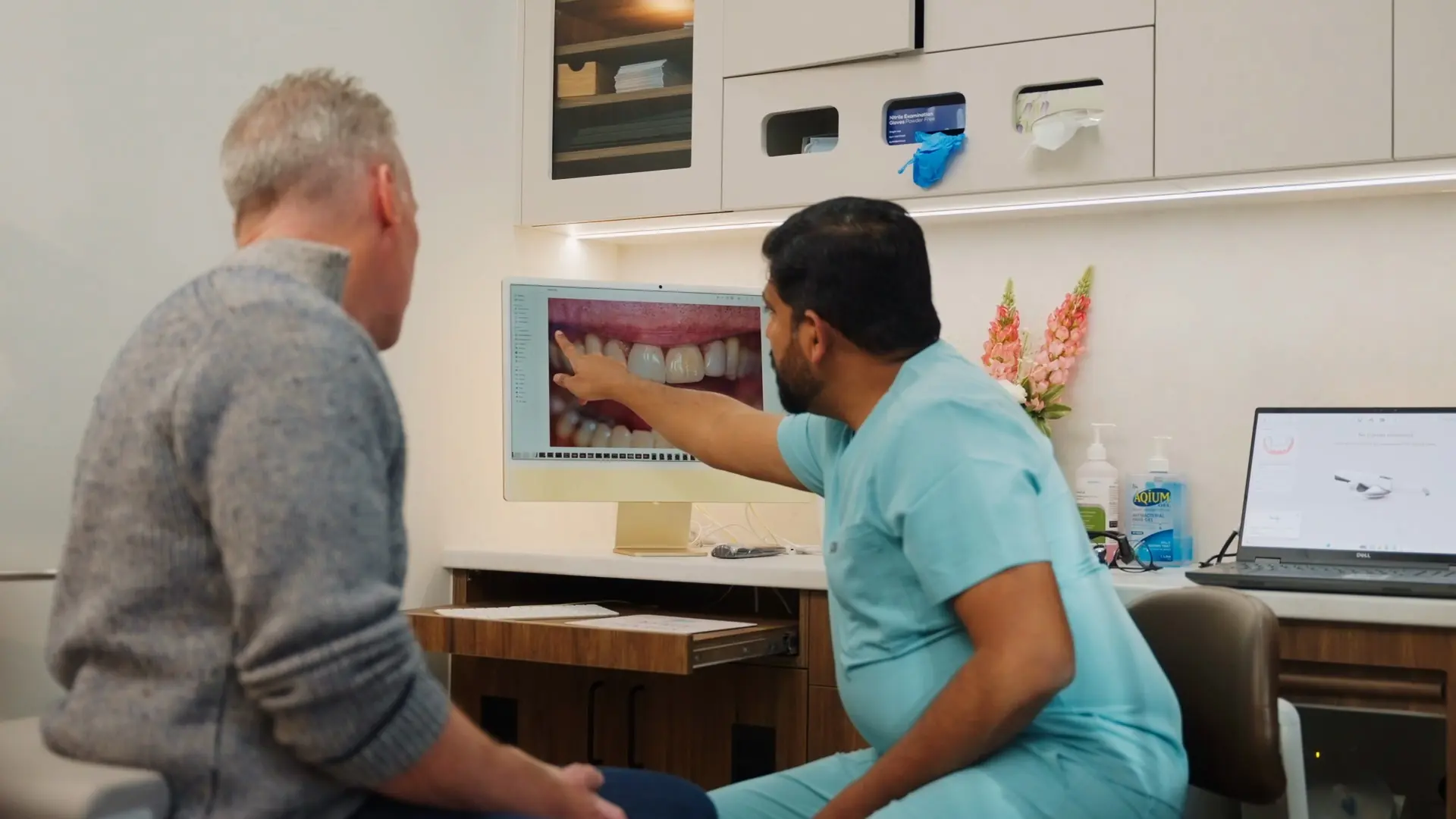
People who have left it a long time generally imagine one of two things: that everything is quietly fine because nothing hurts, or that it is a catastrophe. Both are usually wrong, and in different directions.
This article sets out what tends to change over a long gap. The aim is an honest picture rather than a frightening one: scare tactics are both unpleasant and counterproductive, since fear is what made most of these gaps long in the first place. It is general information only and is not a substitute for an assessment of your own mouth.
The first thing to understand: pain is a late signal
The reasonable assumption is that if something were wrong, it would hurt. For teeth and gums, that is not how it works.
Decay does not hurt until it approaches the nerve, which can be years after it starts. Gum disease is famously close to painless until it is advanced. A cracked filling can leak for a long time without announcing anything. So “nothing hurts” tells you considerably less than it feels like it should.
This is not an argument for alarm. It is the reason an examination and x-rays are how you find out, rather than waiting to be told by symptoms.
Gum health: the most common finding
This is the one that surprises people, because they came in worried about their teeth.
Gum inflammation (gingivitis) is very common and very reversible. It shows up as bleeding when brushing, which an enormous number of people have quietly decided is normal. It is not, though it is easily treated at this stage.
Left long enough in susceptible people, it can progress to periodontitis, where the supporting bone around the teeth is affected. That part is not reversible, though it is manageable and can be stabilised. The difference between the two is largely a matter of how long it has been going on and how your particular body responds.
The practical point: gum health is usually the more significant story after a long gap, and it is the one most likely to be quietly progressing while nothing hurts.
Decay between the teeth
Where teeth touch each other is the classic long-gap finding, for a simple reason: you cannot see those surfaces, and a toothbrush cannot reach them. Only floss or an interdental brush does, and x-rays are the only way to see what is happening there.
Decay that started small at year two has had eight more years by year ten. Whether that means a filling or something more depends entirely on how fast it progressed, which varies enormously between people: diet, saliva, genetics and cleaning all feed in.
Some people have very little after a decade. Others have a lot. It is genuinely not predictable from the outside, which is why the honest answer to “how bad will it be” is that nobody knows until they look.
Existing dental work reaching its end
Fillings and crowns do not last forever. A filling placed fifteen years ago may be worn, may have a gap at the margin, or may have decay developing underneath it where it cannot be seen.
This is one of the more common findings in a catch-up examination and one of the more straightforward to deal with. Replacing a failing filling before it fails properly is a smaller job than dealing with what happens after.
Wear, cracks and grinding
Ten years of chewing does measurable things, particularly if you grind or clench. Worn edges, flattened biting surfaces, and cracks that have developed slowly.
Grinding often goes unnoticed by the person doing it. Waking with a tight jaw, headaches around the temples, or a partner mentioning the noise are the usual clues. It is worth raising because it is manageable, and because it affects how any restorative work will hold up.
What usually has not changed
For balance, because the list above reads worse than the typical reality:
- Teeth do not simply fall out during a gap in the absence of significant gum disease or decay.
- Most people are not facing extractions. It happens, but it is not the common outcome.
- A long gap does not mean starting from nothing. Most of your dental work is probably still doing its job.
- Plenty of people need surprisingly little. A clean, a couple of fillings, and a plan for the gums is a very common ten-year result.
The people who come out worst are usually those with a specific additional factor: a high-sugar dietary pattern, a dry mouth from medication, heavy grinding, or a strong susceptibility to gum disease. Not simply the passage of time.
Why waiting longer is the real risk
The honest argument for going now rather than next year is not that something dramatic will happen in the next twelve months. It is that the options narrow.
Decay that could be filled becomes decay that needs a root canal or a crown. Gum inflammation that could be reversed becomes bone loss that can only be managed. A cracked tooth that could be crowned becomes a cracked tooth that has split.
Every one of those steps is a bigger, more expensive, less pleasant intervention than the one before. The gap does not cause damage by itself. It just removes the chance to intervene early.
Finding out
An examination, x-rays and a gum assessment is how the question gets answered, and it produces a specific answer about your mouth rather than a general one. Our article on what actually happens at your first visit after years away sets out what the appointment involves, and where to start when there is a lot to do covers what happens if the list is long.
If the anticipation is the obstacle rather than the treatment, our article on whether the dentist will judge you deals with that directly.
Catch-up dental care at Dental Embassy
Dental Embassy is on Northbourne Avenue in Braddon, close to Civic and the inner north, and open from 7:30am on weekdays and 9:00am to 3:00pm on Saturdays. If it has been years, the full catch-up health check is the appointment built for it.
You can read more about dental care after a long break, call us on 1300 000 230, or get in touch.
Have a question about your own situation?
Book a consultation with the team at Dental Embassy in Braddon. We’ll assess your teeth, explain your options, and answer your questions before anything is decided.