The Dental Implant Process, Step by Step
An educational walkthrough of the dental implant process: assessment, placement, healing, the final crown, and how long each stage takes.
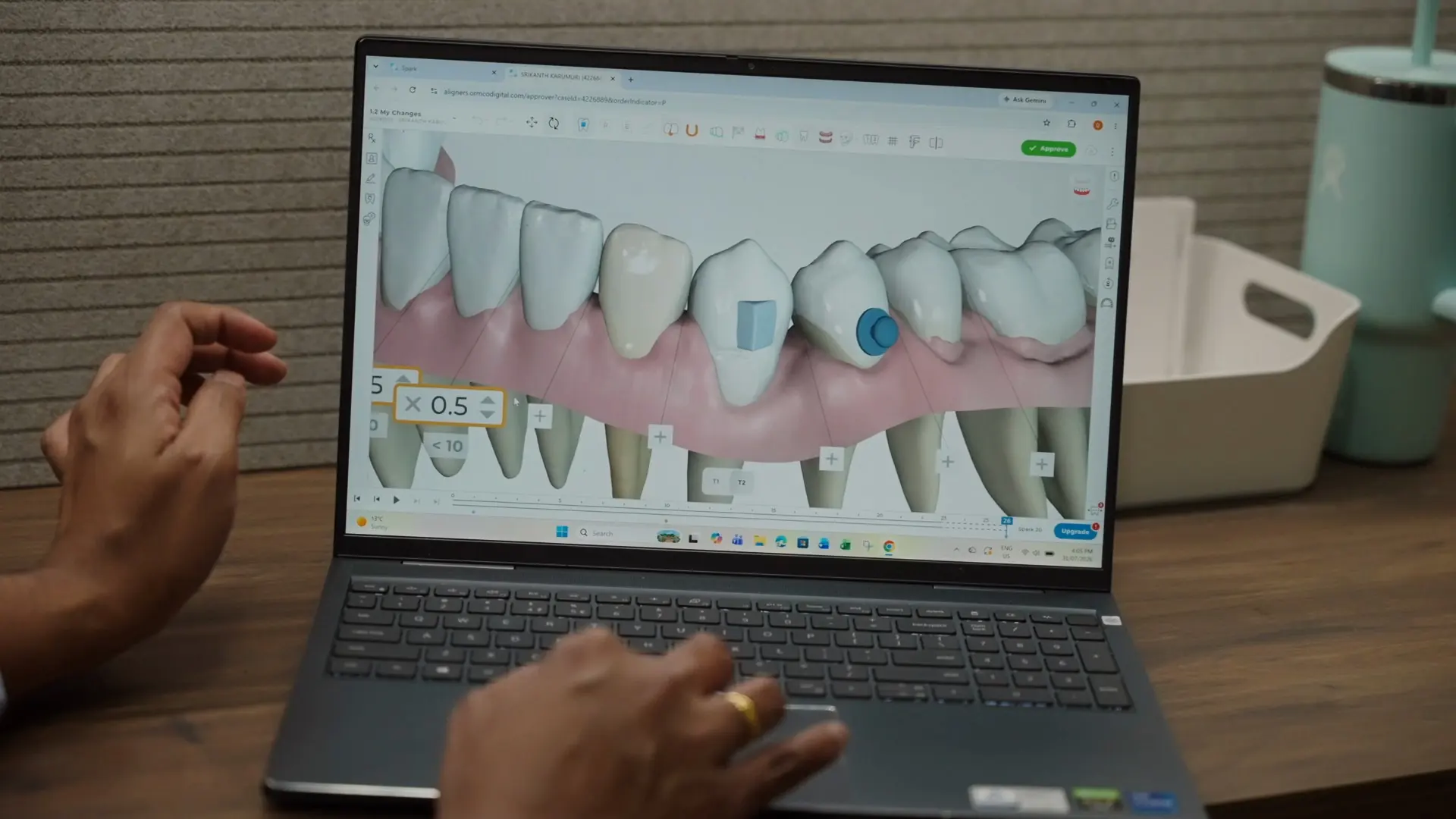
If you are considering a dental implant, it helps to know what the journey actually looks like before you start. An implant is not done in a single appointment. It unfolds over several stages and usually a few months, with healing time built in between the surgical steps. This article walks through the typical implant process from first assessment to the final crown, and explains what happens at each stage. It is general information only and is not a substitute for advice from a qualified practitioner.
One thing worth knowing up front for Canberra patients: at Dental Embassy in Braddon, every stage below happens in-house. Because we place implants here on Northbourne Avenue (a short trip from the city and the northern suburbs on the light-rail line), you are not being referred to a separate surgeon across town partway through. That matters over a process that spans several appointments, whether you are coming in from Ainslie and O’Connor nearby or from further afield in the ACT.
An overview: a staged journey
Dental implant treatment is best understood as a sequence rather than a single procedure. In broad terms it involves four stages: assessment and planning, placement of the implant, a healing period, and fitting the final tooth. The whole process commonly takes somewhere in the region of three to six months, though the exact timeline varies with your individual situation and how your body heals. The reason it takes time is the healing stage in the middle, and that stage is what makes an implant work.
Stage 1: Assessment and planning
Everything begins with an assessment. Before any treatment is planned, your practitioner reviews your medical and dental history, examines your mouth, and takes imaging, often an OPG (a panoramic X-ray) or a CT/CBCT scan that shows the jawbone in three dimensions.
This stage answers the important questions: is there enough healthy bone to support an implant, where exactly should it be placed, and are there any nearby structures to work around? Sometimes the assessment shows that preparatory work, such as bone grafting, is needed first, which adds to the timeline. The output of this stage is a treatment plan tailored to you. The factors that influence the cost of that plan are covered in our guide to what affects the cost of dental implants in Canberra.
Stage 2: Placing the implant
The second stage is the surgical step: the implant post (a small, screw-shaped fixture that acts as an artificial tooth root) is placed into the jawbone where the tooth is missing. The gum is then allowed to heal over or around it.
Because this is a surgical procedure, comfort and anxiety are part of the conversation. Sedation is available at Dental Embassy for the surgical step in several forms, including nitrous oxide (“happy gas”), oral sedation and IV sedation, so that treatment can be made more manageable for people who feel nervous about it. Our principal dentist, Dr Srikanth Karumuri, places implants in-house, including implant surgery under sedation, and our surgical dentist Dr Simon Flanagan is also part of the team. You can read more about your options on our sedation dentistry page.
After placement, you will be given aftercare instructions for the days that follow while the area settles.
Stage 3: Healing and osseointegration
This is the stage that takes the most time, and it is the most important to understand. After the implant post is placed, it needs to fuse with the surrounding jawbone in a natural process called osseointegration.
In plain terms, osseointegration is the way living bone grows onto and bonds with the surface of the implant, gradually locking it firmly in place. It is not instant. It happens over weeks to months as the bone remodels around the post. This is what gives a finished implant its stability, because the post becomes anchored in the bone much like a natural tooth root.
During this period you carry on with normal life. Depending on your plan, a temporary tooth may be used for the healing phase so you are not left with a visible gap, though this is not always the case. Because healing varies from person to person, your practitioner decides when the implant is ready for the next stage rather than working strictly to a calendar.
Stage 4: The abutment and crown
Once the implant has integrated and your practitioner is satisfied it is stable, the final stage builds the visible tooth. This involves two parts:
- The abutment: a connector is attached to the top of the healed implant post. This is the piece that links the post to the crown.
- The crown: a custom-made, tooth-shaped restoration is fitted onto the abutment. It is shaped and shade-matched to sit alongside your other teeth.
With the crown in place, the implant is complete and functions as a replacement tooth. From here, an implant is looked after much like a natural tooth, with regular brushing, cleaning between teeth, and routine check-ups.
How long will it all take?
As a rough guide, the full process commonly spans about three to six months, most of which is the healing stage. Some situations take longer, for example if grafting is needed before the implant can be placed, or if healing needs more time. Rather than a fixed schedule, think of it as a series of milestones, each reached when the previous stage is properly complete.
If you are choosing between an implant and other ways to replace a missing tooth, our comparison of implant, bridge or denture sets out how they differ in approach and upkeep.
A note on the procedure: dental implant treatment is surgical and invasive, and all surgical procedures carry some risk. This article is general information, not a diagnosis. Whether implants are suitable for you, and what your specific process would involve, can only be determined by an appropriately qualified practitioner after an assessment.
Talk to Dental Embassy
Dental Embassy in Braddon, Canberra provides implant treatment in-house from start to finish, without referring you elsewhere for surgery. To understand what the process might look like for you, read more on our dental implants page, call us on 1300 000 230, or get in touch to arrange a consultation.
This article is general information only and does not constitute dental or medical advice. Dental implant treatment is surgical and invasive and carries risks. Before proceeding, you should seek advice from an appropriately qualified health practitioner about your individual circumstances.
Have a question about your own situation?
Book a consultation with the team at Dental Embassy in Braddon. We’ll assess your teeth, explain your options, and answer your questions before anything is decided.